Search
Knowledge Center
How to Replace and Upgrade the Main Circuit Breaker?
Learn how to replace and upgrade main circuit breaker. Follow safety steps, choose the right amperage, and know when to call an electrician.
 April 18, 2026
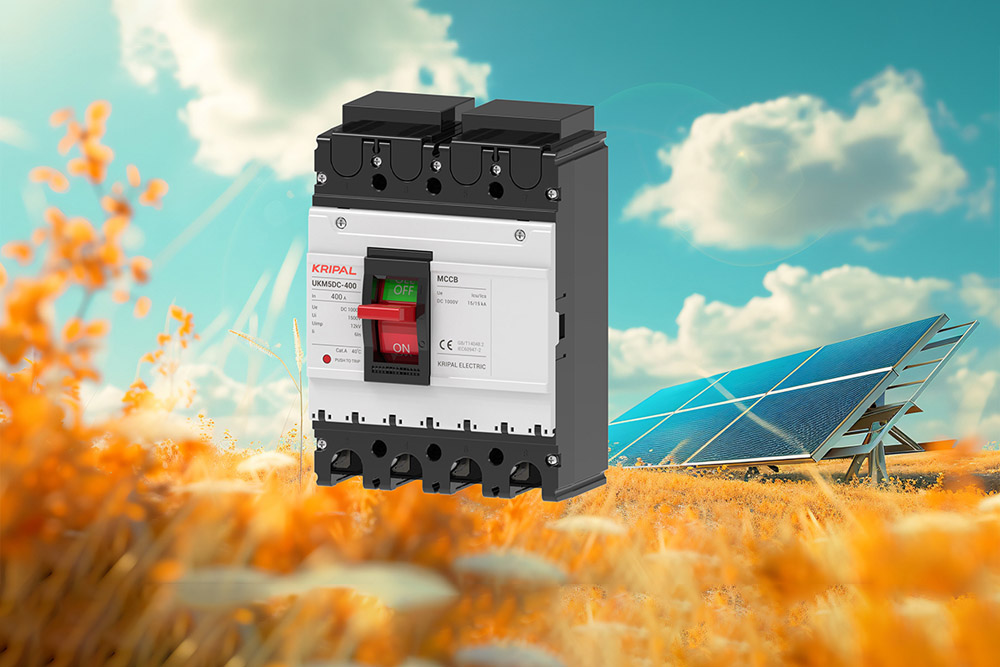
The main circuit breaker can be understood as the main switch of your home electrical system. When it becomes old, lacks sufficient capacity, or trips frequently, it can affect daily electricity use and may even create safety risks. As more electrical appliances are used at home, many people start to consider replacing or upgrading their main circuit breaker. This article will walk you through how to determine when a replacement is needed and how to complete the process in a safer way.
Key takeaways
- When the main circuit breaker becomes old or trips frequently, it should be replaced or upgraded in time
- When choosing a breaker, it should match the correct capacity and be compatible with the panel
- Since the process involves potential risks, you should contact a licensed electrician if you are unsure
How can you tell if the main circuit breaker needs to be replaced?
- Frequent tripping: If the main circuit breaker trips often under normal usage, it may indicate that it has aged or cannot handle the load.
- Overheating or burning smell: If you notice heat, unusual smells, or burn marks inside the panel, it may indicate a dangerous condition and should be addressed quickly.
- Long service life: If the breaker has been used for more than 10 to 20 years, its performance may have declined and could lead to risks.
- Increased electrical demand: If you have added appliances such as air conditioners or EV chargers, the existing capacity may no longer be sufficient.
- Visible damage: If the breaker shows cracks, discoloration, or looseness, it may need to be replaced.
How to choose the right circuit breaker?
- Rated current should match: The amperage should be selected based on your household electricity usage.
- Compatible with the panel: Since different brands and models are not interchangeable, it should match your panel.
- Choose a reliable brand: A product from a trusted manufacturer can provide better safety and performance.
Comparison: Main Breaker (MCCB) vs Branch Breaker (MCB)
| Feature | MCCB (Molded Case Circuit Breaker) | MCB (Miniature Circuit Breaker) |
| Common Use | Main Switch / High-power industrial | Branch Circuits / Domestic appliances |
| Rated Current ($I_n$) | High (Up to 1600A or more) | Low (Typically up to 125A) |
| Breaking Capacity | High (20kA to 100kA+) | Low (Typically 6kA to 10kA) |
| Adjustable Settings | Often features adjustable trip levels | Usually fixed trip characteristics |
| Size | Larger and more robust | Compact and modular (DIN Rail) |
| Protection | Short circuit & Overload (Heavy Duty) | Short circuit & Overload (Standard) |
Safety precautions
Before replacing or upgrading the main circuit breaker, you should understand the potential risks to ensure safe operation.
Risks of electrical work
Since electrical systems may cause electric shock, short circuits, or even fire, extra care should be taken. Even if branch circuits are turned off, some parts may still be energized.
When to call a licensed electrician
If you do not have electrical knowledge, or if you encounter the following situations, you should contact a licensed electrician:
- When the current capacity needs to be upgraded, such as from 100A to 200A
- When the panel is old or the wiring is complex
- When you are unsure how to safely disconnect power
- When the work involves the meter or utility connections
Regulations and codes
Since electrical work is regulated in many areas, permits and inspections may be required. If modifications are done without following local codes, it may affect safety checks or insurance claims, so local requirements should be reviewed in advance.
What tools and materials are needed?
- Insulated screwdriver: It is used to remove the panel cover and secure the breaker while reducing the risk of electric shock.
- Voltage tester: It is used to confirm that the power has been completely turned off.
- Insulated gloves: They provide additional protection during operation.
- New main circuit breaker: It should match the panel and the rated current.
- Pliers: They are used to hold or adjust wires during installation.
How to replace the main circuit breaker?
Replacing the main circuit breaker involves turning off power, removing the panel cover, disconnecting the old breaker, and installing a new one in the same position. After reconnecting the wires securely, the panel is closed and power is restored step by step while checking that everything works properly.
Step one: Remove the panel cover
Before starting, all branch breakers should be turned off, after which the main breaker should be turned off to reduce load. Then use an insulated screwdriver to remove the screws and carefully take off the panel cover. At this point, you can see the internal layout, and it is helpful to take a photo for reference.
Step two: Disconnect the wiring
Before proceeding, use a voltage tester to confirm that the load side has no power. Locate the wires connected to the main breaker, loosen the terminal screws, and carefully remove the wires. Since the incoming side may still be energized, you should avoid touching exposed metal parts.
Step three: Remove the old breaker
Since the main breaker is usually secured by a clip or plug in structure, it can be gently pulled out or released. The process should be done carefully to avoid affecting surrounding components.
Step four: Install the new breaker
The new breaker should be aligned with the original position and firmly inserted. After that, reconnect the wires and tighten the screws so that the connection is secure. You can gently pull the wires to confirm they are fixed properly.
Step five: Reconnect and test
After confirming that all connections are secure and there are no exposed wires, reinstall the panel cover. When restoring power, turn on the main breaker first, and then turn on the branch breakers one by one. Observe whether the system operates normally.
How to upgrade the main circuit breaker?
Is an upgrade really needed?
Before upgrading, you should determine whether your electrical demand has increased. If high power appliances have been added or if tripping occurs frequently, it may indicate that the current capacity is not sufficient. A simple load calculation can help you decide the appropriate capacity.
Check panel compatibility
Since upgrading involves more than replacing a breaker, the panel should support the higher capacity. If the panel is outdated, a full system upgrade may be required.
Whether a professional is required
Since upgrading often involves the meter and utility connections, which may still be energized, it is generally handled by a licensed electrician who follows local codes.
Full understanding of replacing the main circuit breaker
Replacing or upgrading the main circuit breaker may seem complicated, but if proper steps are followed and safety is prioritized, basic replacement can be handled. However, if the situation involves upgrades or uncertainty, working with a professional can provide better assurance. The goal is to maintain a safe and stable electrical system.
KRIPAL provides professional circuit breakers and has a team that can offer reliable service. You are welcome to visit the homepage for more information.
FAQs
Q: Can I replace the main circuit breaker myself?
If it is a basic replacement and you have some electrical knowledge, it can be done. If you are unsure, contact a licensed electrician.
Q: What amperage should I choose for the main circuit breaker?
Common options include 100A, 150A, and 200A, and the choice depends on your household demand and panel specifications.
Q: What is the difference between a main breaker and a regular breaker?
The main breaker controls the entire electrical system, while a regular breaker controls a single circuit.
Q: What should I do if it still trips after replacement?
It may indicate overload or wiring issues rather than a breaker problem, so further inspection is recommended.
Q: Can I upgrade the main circuit breaker by myself?
In most cases, it should be handled by a licensed electrician since it involves the meter and incoming power connections.