Search
News
What Is the Difference Between Relays, Contactors, and Solid State Relays?
Confused about relays, contactors, and SSRs? Discover key differences to understand how to choose a relay for your HVAC or industrial system.
 February 25, 2026
Key Takeaway
Relays, contactors, and solid state relays are not interchangeable by current rating alone. Load type, switching duty, and system architecture determine which device fits best in a given application.
Relays, contactors, and solid state relays are all switching devices, but they are designed for different types of loads and operating conditions. While they may perform a similar function on the surface, using the wrong device can lead to overheating, contact damage, or unreliable operation.
Relays are commonly used for signal and low-power control. Contactors are designed for power circuits such as motors and heaters. Solid state relays use semiconductor components instead of mechanical contacts and are applied where silent or high-speed switching is required.
This article explains how relays, contactors, and solid state relays differ in structure, load capability, and typical use cases, followed by practical selection guidelines and common misunderstandings seen in real projects.
Switching Devices in Control and Power Systems
All three devices serve one basic function: switching an electrical circuit on or off. The difference lies in how much power they handle, how often they switch, and what type of load they are expected to control.
In control systems, switching devices are often divided into two broad categories:
- Signal and logic switching
- Power and load switching
Relays, contactors, and solid state relays each fit into these categories differently.
What Is a Relay?
A relay is an electrically operated switch designed primarily for signal control and low-power switching. It allows a low-voltage control signal to switch another circuit electrically isolated from the control side.
Relays are commonly used in control logic, automation systems, protection circuits, and interface applications where switching currents and voltages are relatively low.
Typical Characteristics of Relays
- Designed for low to moderate current loads
- Compact size and low coil power consumption
- Suitable for frequent switching
- Used mainly for logic control and signal isolation
Relays are widely used in PLC interfaces, control panels, alarms, lighting control, and instrumentation.
What Is a Contactor?
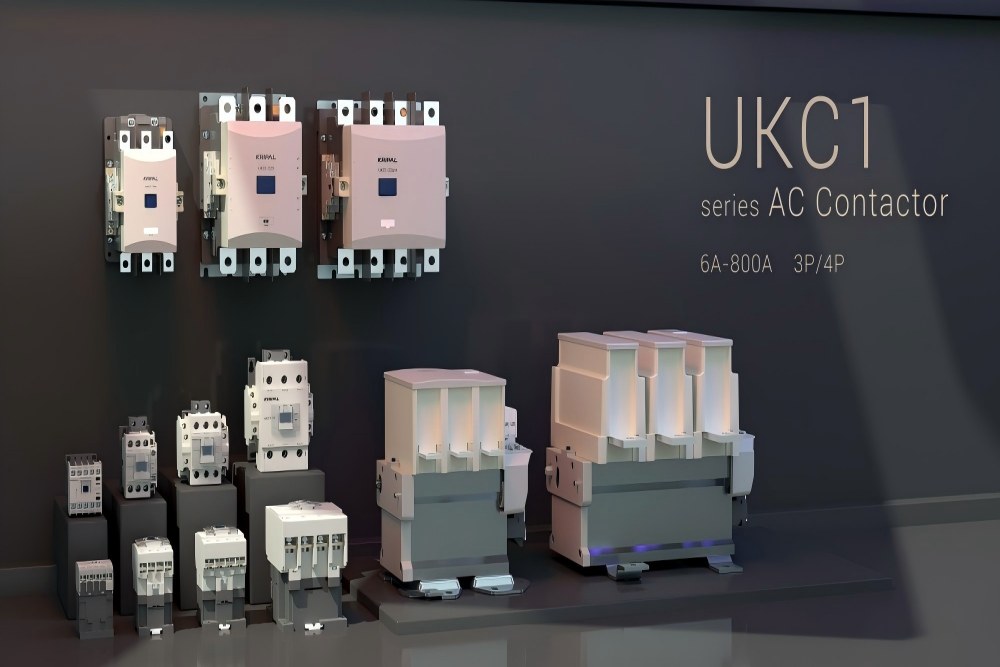
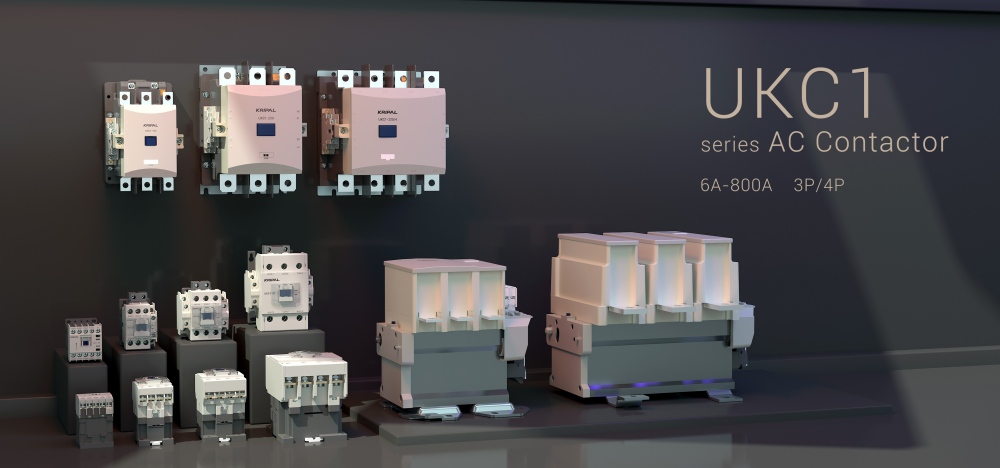
A contactor is a heavy-duty electromechanical switching device designed for power switching. It is built to handle higher currents and voltages and is commonly used to control motors, heaters, pumps, compressors, and other power loads.
Unlike relays, contactors are designed to manage high inrush currents and repetitive electrical stress during load switching.
Typical Characteristics of Contactors
- Designed for high current and voltage levels
- Built to handle frequent electrical stress
- Larger physical size
- Often equipped with arc suppression and auxiliary contacts
Contactors are standard components in motor control centers, HVAC systems, industrial machinery, and power distribution panels.
Key Structural Differences Between Relays and Contactors
While both devices use electromagnetic coils to actuate contacts, their internal design and intended use differ significantly.
| Aspect | Relay | Contactor |
| Main purpose | Signal and logic switching | Power switching |
| Typical current range | mA to ~10 A (some higher) | Tens to hundreds of amperes |
| Arc suppression | Limited or none | Designed for arc control |
| Contact material | Light-duty | Heavy-duty, wear-resistant |
| Mechanical size | Small | Larger |
| Application focus | Control circuits | Power circuits |
Load Types and Operating Categories
One of the most important differences between relays and contactors lies in how they handle different load types.
AC-1 Loads
Resistive or slightly inductive loads such as heaters and lighting circuits. These loads draw relatively stable current without high inrush.
AC-3 Loads
Motor loads such as fans, pumps, and compressors. These loads produce high starting currents, often five to seven times the rated current, and generate arcs when switching.
Relays are generally suitable for AC-1 applications. Contactors are designed for AC-3 motor switching and repeated start-stop operation.
Solid State Relays (SSR)
Solid State Relays use semiconductor devices such as thyristors or MOSFETs instead of mechanical contacts. Because there are no moving parts, SSRs operate silently and switch very quickly.
Advantages of SSRs
- No mechanical wear
- No arcing or contact bounce
- Silent operation
- High switching speed
Practical Limitations of SSRs
- Generate heat during operation
- Require proper heat sinking
- Sensitive to overvoltage and surge conditions
How SSRs Are Commonly Used
Low-power SSRs (≤10 A)
Used for temperature control, lighting, and small resistive loads. These fall clearly within the relay category.
High-power SSRs (50 A–100 A and above)
Used for heaters, soft-start applications, and resistive industrial loads. Functionally, they can replace contactors in some cases, provided thermal management and surge protection are addressed.
Important note:
SSRs are generally not suitable for standard motor start-stop applications (AC-3) unless they are explicitly rated for inductive load interruption. Using SSRs for motor control without proper ratings can lead to failure.
Relay vs Contactor vs Solid State Relay
| Feature | Relay | Contactor | Solid State Relay |
| Typical load | Signal, small resistive | Motors, power loads | Resistive, specific inductive |
| Current range | Low to moderate | High | Varies by design |
| Inrush current handling | Limited | Designed for high inrush | Limited unless rated |
| Arc management | Minimal | Integrated | None (no contacts) |
| Switching noise | Audible | Audible | Silent |
| Switching speed | Moderate | Moderate | Very fast |
Application Scenarios
How to Select the Right Device in Practice
In real projects, selection is driven by load behavior, operating frequency, and safety requirements rather than nominal current alone.
When a Relay Is Typically Appropriate
Relays are suitable for controlling resistive or lightly inductive loads with control currents at or below 10 A, such as 24 V solenoid valves, alarm indicators, and signal lamps. They are also commonly used when multiple contact sets are required for logic functions such as interlocking or timing.
In compact equipment where cost and space are constrained, such as household appliances or small automation devices, relays offer a practical solution.
When a Contactor Should Be Used
Contactors should be applied for three-phase AC motor control, even for relatively small motors, due to high starting current. They are also appropriate for loads with high inductance or surge characteristics, such as transformers and large compressors.
In systems with frequent switching, typically more than 50 operations per day, or where long mechanical service life is expected, contactors provide better durability. Many industrial standards, including EN 60204-1, explicitly require AC-3 rated devices for motor control.
Practical Tip
In motor control circuits, relays and contactors are often used together:
PLC → small relay (24 V coil) → contactor coil (220 V) → motor power circuit
This structure protects PLC outputs while ensuring that the motor power circuit is controlled by a device designed for high-current switching.
Selection Golden Rules
When selecting a switching device, always confirm:
- Load type and operating category
- Switching frequency and duty cycle
- Control voltage compatibility
- Requirement for auxiliary contacts or enclosure protection
Common Misunderstandings Clarified
Can a high-current relay replace a contactor for motor control?
Not recommended. Relays are not designed to handle repeated AC-3 motor starting conditions.
Can a contactor be used for signal control?
Yes, but it is generally inefficient due to size, coil power consumption, and response speed.
Are contactors always superior to relays?
No. Each device serves a different purpose and should be applied accordingly.
Conclusion
Relays, contactors, and solid state relays address different switching needs. Relays are suited for control and signal circuits, contactors handle power and motor loads, and solid state relays provide silent and fast switching for specific applications. Matching the device to the load type, operating conditions, and system design helps ensure stable operation and long service life.
For questions around load classification, AC-1 or AC-3 usage, coordination between control and power circuits, or selecting devices that align with your operating conditions, KRIPAL technical team is available to support your evaluation and design process. Reach out anytime to discuss your application requirements or selection considerations.
Related Resources
Explore News >

How can we assist you?
Tell us a bit more so we can route your request to the right expert.