Search
Knowledge Center
What Kind of Isolator Should We Choose
Learn how to choose the right isolator for your project with our isolator selection guide, comparing optimally suited options for your needs.
 December 17, 2025
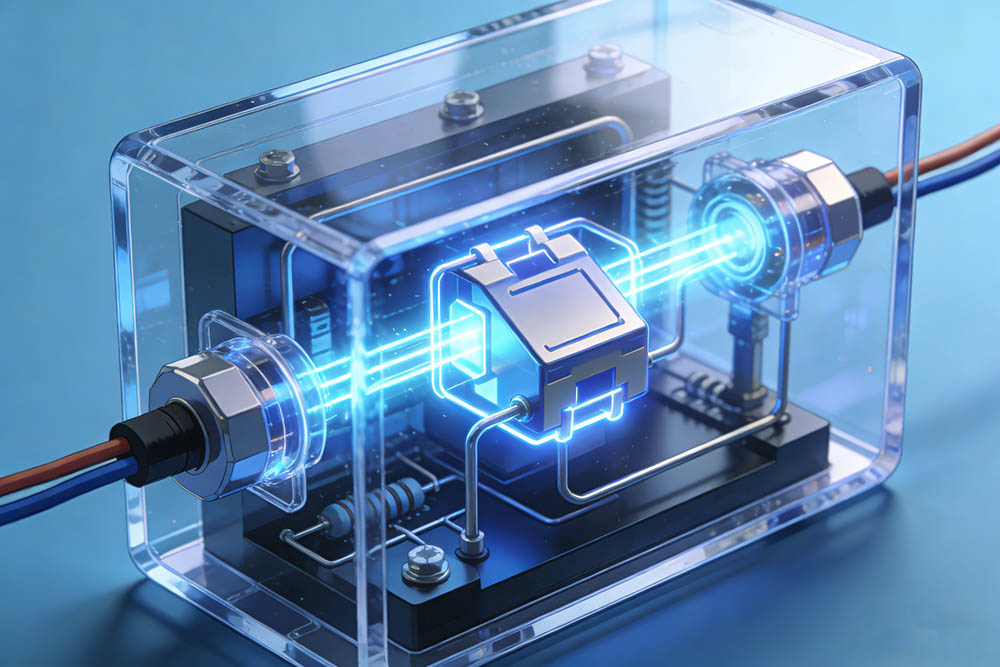
In modern electronics and power applications, isolators directly affect system stability as well as equipment and personnel safety. Since there are many types of isolators available on the market, selection requires a comprehensive evaluation of application scenarios, voltage levels, signal characteristics, and other factors rather than a simple comparison of specifications. This article combines practical considerations to outline the main selection factors and analyze the advantages and limitations of mainstream technologies so that you can identify the solution that best fits your project requirements.
Key Takeaways
- Selection should begin with the application, since voltage level, signal type, transmission speed, and operating environment define the technical requirements.
- Different technologies have distinct characteristics, because optocouplers, magnetic isolation, capacitive isolation, and digital isolators vary in speed, lifespan, and noise immunity.
- Safety and reliability should be prioritized, as withstand voltage, creepage distance, and long term stability directly affect system performance.
- Performance and cost should be balanced so that the chosen solution meets technical and safety requirements while remaining economically reasonable.
What Is an Isolator?
An isolator is a device that enables electrical isolation between two electrical systems while still allowing signals or power to be transmitted. Since it blocks direct current paths, it prevents high voltage, noise, or fault currents from passing from one side to the other.
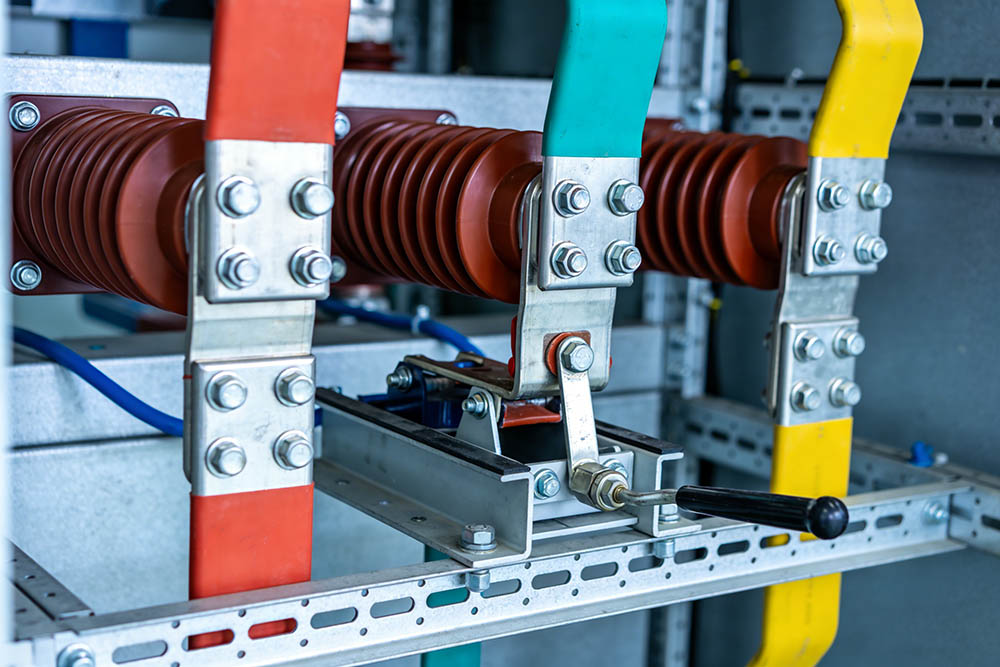
In simple terms, an isolator functions like a bridge through which information can pass while electrical continuity remains separated. This approach ensures proper signal transmission while improving safety and noise resistance.
How Does an Isolator Work?
Physical Isolation Structure
Inside an isolator, high insulation strength materials create a physical barrier between the input side and the output side. Because this barrier can withstand high voltage differences such as 2.5 kV or 5 kV, it prevents current from directly crossing to the other side during fault conditions or voltage surges. By interrupting the electrical conduction path, the two circuits remain electrically independent, which enhances operational safety.
Optical Isolation Principle
In an optocoupler, the input electrical signal drives an internal LED that emits light, which is detected by a photosensitive device on the output side and then converted back into an electrical signal. Since only light transmits information across the isolation barrier, there is no direct electrical connection between input and output. Although this structure is mature and widely used in industrial control and power supply systems, its speed and lifespan may be influenced by LED aging.
Magnetic Isolation Principle
Magnetic isolation is typically based on transformer coupling. The input signal is converted into a high frequency signal, which is transmitted across a micro transformer through magnetic fields and then reconstructed at the output. Because magnetic coupling does not require a conductive path, stable signal transmission can be achieved while maintaining electrical separation. Magnetic isolators generally support high data rates and long operational lifetimes, which makes them suitable for high speed digital communication and precision control systems.
Capacitive Isolation Principle
Capacitive isolators use electric field coupling to transfer signals. The input signal is modulated into a high frequency AC signal, which crosses the isolation barrier through an isolation capacitor and is then demodulated at the output. Since capacitors transfer AC components but block DC current, electrical isolation is maintained. These isolators are typically compact, energy efficient, and capable of supporting high speed digital transmission.
What Types of Isolators Are Available?
Optocoupler Isolators
Optocouplers transmit signals using light. The input drives an LED, while the output side detects the light and converts it back into an electrical signal. Although this technology is mature and cost effective, transmission speed is relatively limited and long term operation may be affected by LED degradation. It is commonly used in industrial control, power feedback, and motor drive applications.
Magnetic Isolators
Magnetic isolators rely on magnetic field coupling. After modulation, the signal crosses the isolation barrier through a micro transformer. Since this approach supports high speed transmission and long service life with strong noise immunity, it is widely used in communication interfaces, data acquisition systems, and renewable energy equipment.
| Type | Working Principle | Advantages | Limitations | Typical Applications |
| Optocoupler Isolators | The input drives an LED that emits light, which is detected on the output side and converted back into an electrical signal. | Mature technology, cost effective, reliable electrical separation | Limited transmission speed, performance may degrade over time due to LED aging | Industrial control, power feedback, motor drive systems |
| Magnetic Isolators | The signal is modulated and transmitted across the isolation barrier through magnetic field coupling using a micro transformer. | High speed transmission, long service life, strong noise immunity | Typically higher cost compared to optocouplers | Communication interfaces, data acquisition systems, renewable energy equipment |
How to Choose the Right Isolator
Clarify the Purpose of Isolation
Before selecting an isolator, define whether it is for personnel protection, voltage separation, ground loop reduction, or compliance with international standards. Projects in regulated or export markets often require products meeting CE, CCS, or COC requirements, while RoHS compliance ensures environmental responsibility.
Determine Voltage and Insulation Requirements
The isolator must match system operating voltage and possible transient conditions. Key parameters include rated isolation voltage and withstand capability. Products verified under IEC standards and certified to CE or other international approvals provide reliable safety assurance and global acceptance.
Select Technology by Signal Type
Analog signals such as 4 to 20 mA loops require precision isolators, while low speed control circuits may use optocouplers. High speed interfaces like SPI, CAN, or RS 485 are better suited to magnetic or capacitive digital isolators. Certified solutions enhance reliability in industrial and marine applications.
Consider Speed and Performance
For high speed communication or PWM control, bandwidth and propagation delay must match system requirements. Choosing internationally certified components helps ensure stable performance.
Evaluate Long Term Reliability
In automation and energy systems, durability is critical. Advanced isolation technologies offer longer service life, and products compliant with RoHS and international certifications strengthen safety, reliability, and global market competitiveness.
What Happens If the Wrong Isolator Is Selected
If the isolation rating is insufficient, voltage breakdown may occur during surge events, which can allow high voltage to reach low voltage circuits and potentially damage equipment or endanger operators. When bandwidth or speed specifications do not meet system requirements, excessive delay, waveform distortion, or data loss may result, especially in high speed communication or PWM control applications.
If common mode transient immunity is too low, noise in harsh environments may cause false triggering, unstable signals, or system resets, particularly in motor drives and inverter systems. If components with limited lifespan are used in demanding environments, performance degradation may appear earlier than expected, which increases maintenance frequency and operational cost.
In regulated industries such as medical, hazardous location, or power systems, failure to meet certification requirements may prevent product approval or market entry. Incorrect selection often leads to circuit redesign or component replacement, which increases development time and financial cost, especially when changes occur after mass production.
Conclusion
During practical selection, there is no universal isolator that fits every application, since suitability depends entirely on system requirements. Only by understanding voltage level, signal characteristics, transmission speed, environmental conditions, and regulatory standards can an appropriate decision be made. Pursuing higher specifications without justification or focusing solely on cost reduction may introduce hidden risks.
Ultimately, choosing an isolator is an engineering decision that defines the electrical safety boundary of a system. KRIPAL can help you find the most suitable isolators for you.
FAQs
Q: Are isolators and disconnect switches the same?
They are different. A disconnect switch is a mechanical device used in power systems to physically open a circuit, while an isolator in electronics is a device that transfers signals or power while maintaining electrical separation.
Q: Do all systems require isolators?
Not all systems require them. When high and low voltage circuits coexist, when electromagnetic interference is significant, or when safety regulations apply, isolation is typically adopted based on risk assessment and compliance requirements.
Q: What is the difference between an optocoupler and a digital isolator?
An optocoupler transfers signals using light and generally supports lower speeds, while a digital isolator often uses magnetic or capacitive coupling, which enables higher transmission speed, longer lifespan, and improved stability.
Q: Is higher isolation voltage always better?
Not necessarily. Isolation voltage should match the actual working voltage and safety standards. Excessively high ratings may increase cost and size, while insufficient ratings introduce safety risks.
Q: Can an isolator affect signal accuracy?
It can in certain situations. If bandwidth or linearity is inadequate, analog signal accuracy may be affected, which is why high precision signal isolators are preferred in measurement applications.
Related Resources
Explore Knowledge Center >

Need a matching KRIPAL product?
Share voltage, quantity and destination. An engineer will reply with options and lead time.