Search
News
How to Tell If Your AC Contactor Is Going Bad
Learn how to identify AC contactor failure with symptoms like buzzing noises and intermittent cooling, plus essential troubleshooting tips.
 December 09, 2025
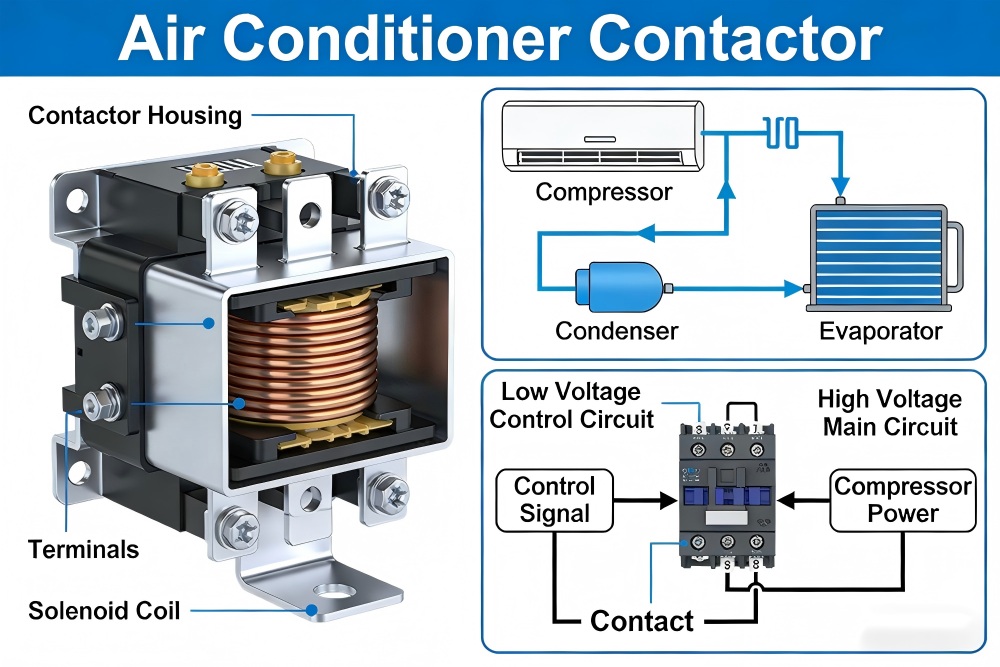
It’s the middle of summer. The temperature is soaring, and suddenly your air conditioner stops working. In many cases, the culprit is a failing AC contactor. Though compact and inexpensive compared to other HVAC components, the contactor acts as a gateway for electrical power to your compressor and outdoor fan. When it malfunctions, your entire cooling system can be affected.
Understanding what an AC contactor does, why it fails, and how to spot early warning signs can help you avoid unexpected breakdowns.
Key Takeaway
- An AC contactor may be a small component, but it plays a promoting role in powering your air conditioning system.
- Warning signs such as buzzing noises, intermittent cooling, overheating, or visible contact damage often indicate impending failure.
- Ignoring early symptoms can lead to complete system shutdown.
- Early detection helps prevent costly repairs and unexpected breakdowns.
What Is an AC Contactor?
An AC contactor is a critical component in air conditioning systems. It controls the high voltage power supplied to key parts such as the compressor and condenser fan motor. Using a low voltage signal from the thermostat, it safely switches high current loads to ensure reliable cooling operation.
How It Works
When the thermostat calls for cooling, it sends a low voltage signal to energize the contactor coil. The magnetic field pulls the contacts closed, allowing high voltage power to flow to the compressor and fan. When cooling is no longer needed, the contacts open and the system stops.
Why Do AC Contactors Fail?
Normal Wear and Tear
Each time the AC cycles on and off, the contacts open and close. Over time:
- Contacts become pitted
- Arcing causes surface damage
- Conductivity decreases
Eventually, the contactor can no longer maintain proper electrical flow.
Electrical Issues
Electrical problems are a major contributor to failure:
- Low control voltage causing incomplete engagement
- Short circuits
- Loose or corroded wiring
- Arcing due to poor contact alignment
These issues accelerate internal damage.
Overheating
High ambient temperatures, poor ventilation, or excessive current can cause:
- Coil insulation breakdown
- Increased resistance
- Premature component failure
Mechanical Obstructions
Dust, insects, or debris may prevent smooth movement of internal parts, leading to sticking or failure to engage.
Improper Installation & Harsh Environments
- Incorrect voltage rating
- Poor wiring practices
- Exposure to moisture, salt air, or corrosion
These factors significantly shorten lifespan.
| Symptom | What You May Notice | Possible Cause | Risk Level |
| Buzzing or Humming Noise | Continuous buzzing from outdoor unit | Low coil voltage or partial contact engagement | Medium |
| Rapid Clicking | Repeated clicking during startup | Unstable voltage or coil malfunction | Medium |
| AC Won’t Start | Thermostat calls for cooling but nothing runs | Burnt coil or open circuit | High |
| Intermittent Cooling | System starts and stops unpredictably | Worn or misaligned contacts | High |
| Visible Burn Marks | Scorching or pitting on contacts | Arcing and overheating | High |
| Overheating Contactor | Hot to the touch or melting insulation | Overcurrent or poor connections | High |
| Higher Energy Bills | Increased electricity usage | Increased resistance from damaged contacts | Medium |
How to Troubleshoot an AC Contactor
Confirm Power Is Off
Before performing any inspection or testing:
- Turn off the main breaker connected to the HVAC system.
- Shut off the outdoor disconnect switch.
- Use a voltage tester or multimeter to verify zero voltage across terminals.
Never rely solely on the thermostat being turned off. Residual voltage may still be present and can cause serious injury.
Check Coil Resistance
Using a digital multimeter set to the resistance setting:
- Measure across the coil terminals.
- “Open circuit� or infinite reading: Indicates a burnt or broken coil.
- Extremely low resistance: May indicate an internal short circuit.
- A normal reading should fall within the manufacturer’s specified range.
If the coil resistance is outside specification, replacement is usually required.
Verify Control Voltage
- Measure the voltage applied to the coil when the thermostat calls for cooling.
- Compare the measured voltage to the rated coil voltage (commonly 24V in residential systems).
Possible issues:
- Low voltage: Coil may chatter or fail to fully engage.
- Fluctuating voltage: Causes buzzing and premature wear.
- No voltage: Issue may originate from thermostat, transformer, or wiring.
Stable voltage is essential for proper contactor operation.
Inspect Contacts
Visually examine the contact points for signs of wear or damage:
Look for:
- Pitting
- Discoloration
- Welding (contacts fused together)
- Carbon buildup
- Uneven contact surface
Minor debris or light oxidation can sometimes be cleaned carefully.
However, severely burned, welded, or uneven contacts should not be repaired — replacement is the safest solution.
Damaged contacts increase electrical resistance, which can:
- Reduce efficiency
- Cause overheating
- Lead to compressor damage
Check Mechanical Movement
With power fully disconnected:
- Manually press the contactor plunger.
- It should move smoothly and return freely.
- There should be no sticking, grinding, or stiffness.
If movement feels restricted, possible causes include:
- Dust or insect buildup
- Internal spring damage
- Warped or misaligned components
Mechanical binding prevents proper engagement and may cause intermittent system operation.
Tighten Terminal Connections
Inspect all wiring terminals and screw connections:
Loose wiring can cause:
- Electrical arcing
- Overheating
- Voltage drop
- Intermittent power loss
Check for:
- Burned insulation
- Melted wire ends
- Signs of corrosion
Use a screwdriver to tighten connections according to manufacturer torque specifications. Avoid over-tightening, which may damage terminals.
How to Fix AC Contactor Problems
Regular Preventative Maintenance
- Inspect annually
- Clean dust and debris
- Tighten connections
- Monitor for heat damage
Preventative care significantly extends service life.
Repair Minor Issues
- Clean lightly oxidized contacts
- Tighten loose terminals
- Address unstable control voltage
Replace When Necessary
If the contactor shows severe wear:
- Choose an exact voltage/current match
- Disconnect power completely
- Label wires before removal
- Follow manufacturer installation guidelines
- Test system after installation
Call a Professional When Needed
Because contactors handle high voltage, improper handling can result in:
- Electric shock
- Equipment damage
- Fire hazard
Certified technicians ensure safe and compliant installation.
| Category | Recommended Actions | Notes |
| Regular Preventative Maintenance | Inspect annually
Clean dust and debris Tighten connections Monitor for heat damage |
Preventative care helps extend service life and reduce unexpected failures |
| Repair Minor Issues | Clean lightly oxidized contacts
Tighten loose terminals Stabilize control voltage |
Suitable for minor wear or connection problems |
| Replace When Necessary | Select correct voltage and current rating
Disconnect power completely Label wires before removal Follow manufacturer guidelines Test system after installation |
Replacement is required if contacts are severely worn or damaged |
| Call a Professional | Avoid improper handling of high voltage components | Prevents electric shock, equipment damage, and fire hazards; certified technicians ensure safe installation |
How Long Does an AC Contactor Typically Last?
- Usage frequency: Systems that cycle on and off frequently cause more contact wear and shorter lifespan.
- Operating environment: High temperatures, humidity, dust, or coastal salt air can accelerate corrosion and degradation.
- Electrical conditions: Stable voltage extends contactor life, while low or fluctuating voltage increases arcing and wear.
- Load conditions: Overloading or operating near maximum current ratings shortens service life.
- Maintenance practices: Regular inspection and tightening of connections can significantly extend lifespan.
Conclusion
Although small in size, air conditioning contactors are useful to air conditioning systems. Never ignore any early signs of failure, as timely inspection and replacement can prevent malfunctions, reduce maintenance costs, and ensure reliable cooling during peak summer seasons.
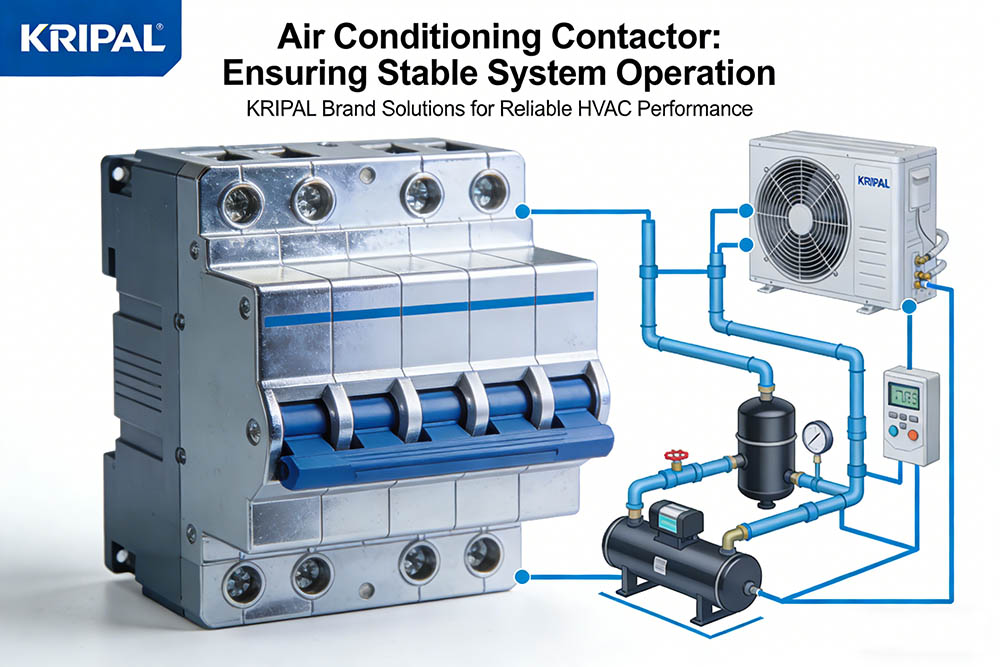
KRIPAL offers a wide variety of AC contactors to perfectly solve any problems you may have in this area. If you have specific requirements, our technical experts are ready to assist you in selecting the right solution.
FAQs
Q: Can a bad AC contactor completely stop my air conditioner?
Yes. If the contactor fails, power cannot reach the compressor or fan motor, preventing the system from running.
Q: Is it safe to test a contactor myself?
Testing involves high voltage. Unless you are trained and experienced, professional service is strongly recommended.
Q: Can a contactor cause higher energy bills?
Yes. Damaged contacts increase electrical resistance, forcing the system to draw more current.
Q: Should I replace both the contactor and capacitor at the same time?
If both components are aging, replacing them together can prevent future service calls.
Related Resources
Explore News >

How can we assist you?
Tell us a bit more so we can route your request to the right expert.