Search
Knowledge Center
Electrical Basics: Voltage, Current and Power Explained
Understand the fundamentals of voltage, current, and power. Learn how they differ, how they work together, and why these electrical basics matter in real-world applications.
 May 26, 2026
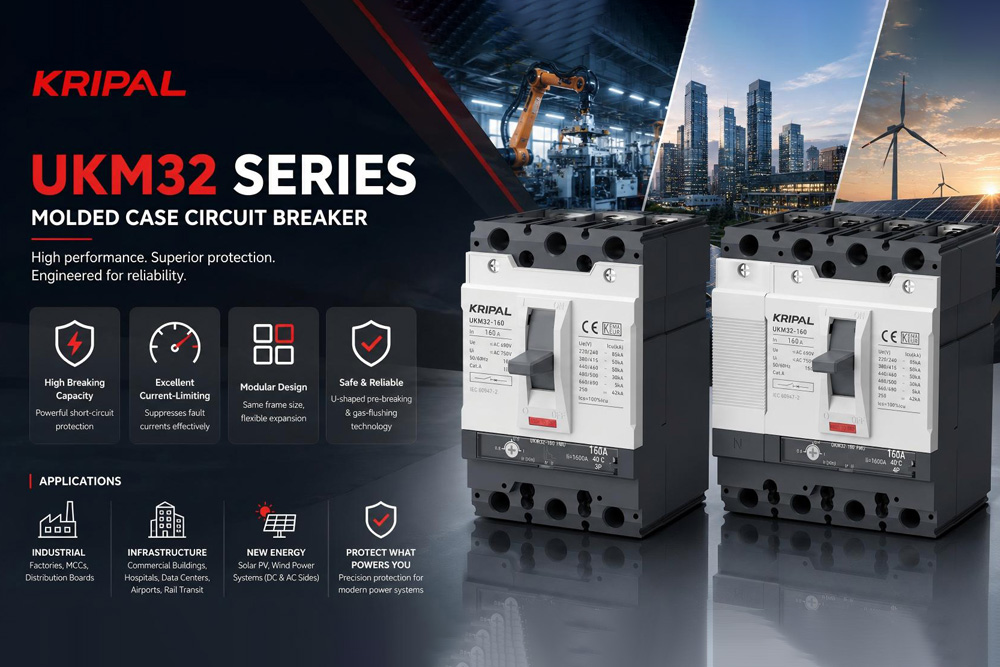
Electricity powers nearly every aspect of modern life, from household appliances and office equipment to industrial machinery and renewable energy systems. Yet many people encounter the terms voltage and current without fully understanding what they mean or how they differ.
Although voltage and current work together in every electrical circuit, they represent two distinct concepts. Understanding the relationship between them makes it easier to interpret electrical specifications, choose appropriate equipment, and troubleshoot common electrical issues.
Key Takeaways
- Voltage is the electrical force that pushes electrons through a circuit.
- Current is the flow of electric charge moving through a conductor.
- Voltage is measured in volts (V), while current is measured in amperes (A).
- Voltage exists even under open-circuit conditions, when no load is connected.
- Current only flows when a complete circuit is available.
- Voltage and current work together to deliver electrical power.
What Is Voltage?
Voltage is the difference in electrical potential between two points in a circuit. It represents the amount of energy available to move electric charges from one location to another.
A common way to visualize voltage is by comparing it to water pressure in a pipe. Just as water pressure creates the force needed to move water through a plumbing system, voltage provides the force that drives electrons through an electrical conductor.
The higher the voltage, the greater the potential force available to move electrical charges.
Common examples include:
- A standard AA battery provides about 1.5 volts.
- Many USB devices operate at 5 volts.
- Residential power outlets often supply 120V or 230V depending on the region.
- Industrial equipment may operate at much higher voltages.
Voltage is measured using a voltmeter and expressed in volts (V).
What Is Current?
Current refers to the movement of electric charge through a conductor. In most electrical systems, this movement consists of electrons flowing through wires.
Using the water analogy again, if voltage is the pressure, current is the actual amount of water flowing through the pipe.
Current indicates how many electrical charges pass a given point during a specific period of time. A higher current means a larger quantity of charge is moving through the circuit.
Current is measured in amperes, commonly called amps (A).
Examples of current consumption include:
- Smartphone chargers often deliver 1A to 3A.
- LED lighting circuits may use only a small fraction of an amp.
- Electric heaters and air conditioners can draw several amps or more.
- Industrial motors may require significantly higher currents during operation.
Why Voltage and Current Are Different
Voltage and current are closely related, but they describe different aspects of electricity.
- Voltage represents the potential to move charge.
- Current represents the actual movement of charge.
An electrical system may have voltage present even when no current is flowing. For example, a battery sitting on a table contains voltage between its terminals. However, because no circuit is connected, current does not flow.
Once a complete circuit is created, the voltage pushes charges through the conductor, producing current.
This distinction explains why measuring voltage alone does not always reveal how much electricity is actually being used.
A Simple Water Flow Analogy
One of the easiest ways to understand voltage and current is through a water system.
A simple way to understand voltage and current is to imagine a water tank connected to a pipe. The water pressure inside the tank is similar to voltage because it provides the force that pushes water through the system. The amount of water flowing through the pipe is similar to current, which represents the actual movement of electrical charges through a conductor.
A valve installed in the pipe acts like a switch or electrical load, controlling or restricting the flow as needed. This analogy helps illustrate how voltage drives current through a conductor in much the same way that water pressure drives water through a pipe.
If pressure increases while the pipe remains the same size, more water tends to flow. Likewise, increasing voltage can increase current if circuit conditions remain unchanged. Although the analogy is not perfect, it helps explain why voltage and current are connected yet fundamentally different.
The Relationship Between Voltage, Current, and Resistance
Voltage and current do not operate independently. Their relationship is described by Ohm’s Law.
V = I x R
Where:
- V = Voltage (Volts)
- I = Current (Amperes)
- R = Resistance (Ohms)
According to this relationship, increasing the voltage generally causes more current to flow through a circuit because a greater electrical force is available to move the charge. In contrast, increasing the resistance reduces the current by making it more difficult for electricity to pass through the conductor.
When resistance is lower, the path becomes easier for the electric charge to travel, allowing a larger amount of current to flow. This balance between voltage, current, and resistance is the foundation of how electrical circuits operate.
For example, if a circuit has a resistance of 10 ohms and a voltage of 100 volts, the resulting current is 10 amps.
This relationship forms the foundation of electrical circuit design and analysis.
How Voltage and Current Work Together to Produce Power
Electrical power depends on both voltage and current.
The basic power equation is:
P = V x I
Where:
- P = Power (Watts)
- V = Voltage (Volts)
- I = Current (Amperes)
A device can achieve the same power output through different combinations of voltage and current.
For instance:
- 12V x 10A = 120W
- 24V x 5A = 120W
Both systems deliver the same amount of power, but the current requirements differ.
This principle explains why higher-voltage transmission systems are commonly used for long-distance power distribution. Higher voltage allows the same power to be transferred with lower current, reducing energy losses in conductors.
Voltage vs Current: Key Differences
| Feature | Voltage | Current |
| Definition | Electrical potential difference | Flow of electric charge |
| Function | Pushes electrons through a circuit | Represents moving electrons |
| Unit | Volt (V) | Ampere (A) |
| Measuring Instrument | Voltmeter | Ammeter |
| Water Analogy | Water pressure | Water flow rate |
| Can Exist Without the Other? | Yes | No, current requires voltage and a closed circuit |
| Symbol | V | I |
Real-World Examples
| Application | Voltage and Current in Practice |
| Household Power Outlet | A wall outlet may provide 230V, but current only flows when an appliance is connected and switched on. The outlet continuously maintains voltage, while the amount of current depends on the connected load. |
| Smartphone Charging | A charger delivers a specific voltage and allows a controlled amount of current to flow into the battery. Modern charging systems regulate both values to ensure safe and efficient charging. |
| Electric Motors | Motors use voltage to create the force required for operation and draw current based on the workload. As mechanical demand increases, current consumption typically rises as well. |
| Solar Power Systems | Solar panels generate both voltage and current. Together, these values determine the amount of electrical power available for batteries, inverters, and connected equipment. |
Why Understanding the Difference Matters
Knowing the difference between voltage and current helps in many practical situations.
When selecting electrical components, understanding voltage ratings prevents equipment damage. Knowing current requirements helps determine proper wire sizes, circuit breaker ratings, and power supply capacity.
For technicians and engineers, distinguishing between voltage and current is essential when diagnosing electrical faults and evaluating system performance.
Even for everyday users, recognizing the difference makes electrical specifications easier to understand and compare.
Conclusion
Voltage and current are two of the most fundamental concepts in electricity. Voltage provides the driving force that pushes electrical charges, while current represents the actual movement of those charges through a circuit.
Neither operates in isolation. Together with resistance, they determine how electrical systems function and how power is delivered to devices ranging from small electronics to large industrial equipment. Looking for reliable electrical products? Browse our collection and get in touch if you need help selecting the right equipment.
Frequently Asked Questions
Q Is voltage more dangerous than current?
Both can be dangerous. Voltage creates the potential for current to flow, while current passing through the body is what typically causes injury. The level of risk depends on several factors, including voltage, current, exposure time, and the path through the body.
Q Can there be voltage without current?
Yes. A battery that is not connected to a circuit still has voltage between its terminals, even though no current is flowing.
Q Can there be current without voltage?
In practical electrical circuits, current requires a voltage difference to drive the movement of charges.
Q What happens if the voltage increases?
If resistance remains unchanged, increasing voltage will generally increase current according to Ohm’s Law.
Q Why are current ratings important?
Current ratings help ensure that wires, connectors, circuit breakers, and electrical devices can safely handle the amount of electricity flowing through them.
Q What is measured in amps?
Current is measured in amperes (amps), which indicates the rate at which electric charge flows through a conductor.
Q What is measured in volts?
Voltage is measured in volts and represents the electrical potential difference between two points in a circuit.
Related Resources
Explore Knowledge Center >
Need a matching KRIPAL product?
Share voltage, quantity and destination. An engineer will reply with options and lead time.