Search
Knowledge Center
What Is the Difference Between AC and DC Surge Protective Devices?
Learn the difference between AC and DC surge protective devices (SPD). Compare voltage, arc suppression, standards, and selection for solar or AC systems.
 April 10, 2026
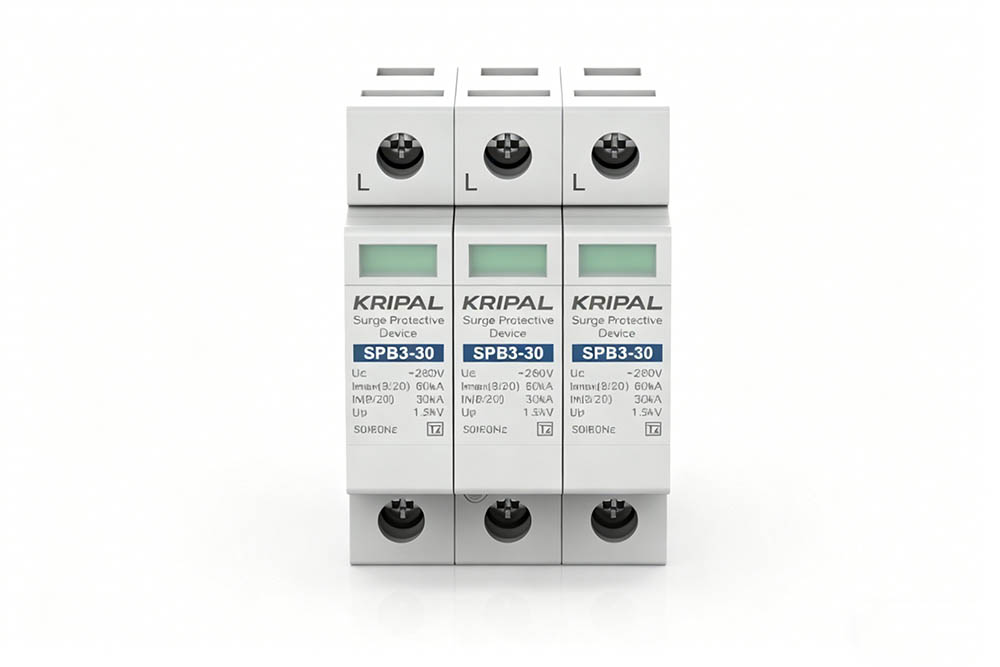
This article explains the differences between alternating current (AC) and direct current (DC) surge protective devices (SPD), covering their operating principles, applications, voltage handling, and selection considerations.
Readers will gain an understanding of how AC and DC SPDs function, why they cannot replace each other, and how to choose the appropriate SPD for each system. The content also highlights the distinctions in surge suppression, response, and safety features.
Key Takeaways
- AC SPDs handle voltage spikes in alternating current systems, while DC SPDs manage surges in systems with constant voltage direction.
- The internal structure of AC and DC SPDs differs to match their respective voltage waveforms and arc behavior.
- DC SPDs respond faster to short duration, high amplitude surges and generally have higher voltage ratings.
- Selection requires attention to system voltage, polarity, installation location, and coordination with protective devices.
- Using AC SPD in DC systems or DC SPD in AC systems can cause failure or insufficient protection.
What Is a Surge Protective Device (SPD)?
A surge protective device (SPD) protects electrical equipment from transient overvoltages, such as lightning strikes or switching surges, by diverting excess energy to ground. This reduces voltage to levels that equipment can handle and minimizes the risk of damage.
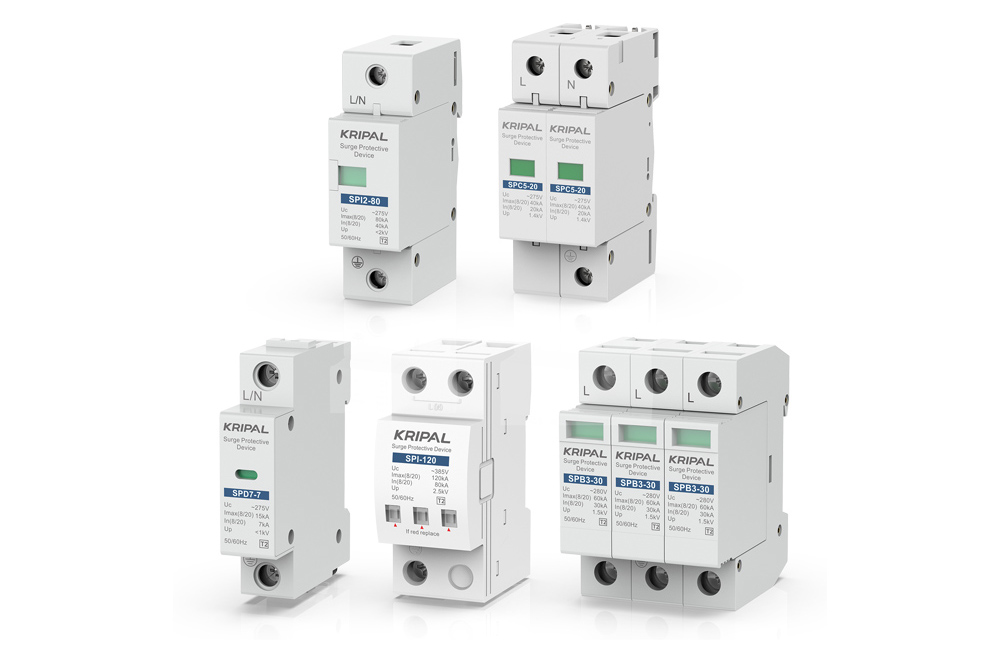
AC and DC SPD: Basic Principles and Operation
SPDs reduce transient overvoltages and divert excess energy from sensitive devices. AC and DC systems differ in voltage behavior, which determines how SPDs respond and which components are used.
AC SPD
AC SPD manages voltage spikes in alternating current systems, protecting both industrial and residential equipment. Key components include metal oxide varistors (MOV) and gas discharge tubes (GDT), which respond to surges by lowering impedance and directing excess voltage to ground. This prevents equipment failure, data loss, or downtime in electrical systems connected to the AC grid.
DC SPD
DC SPD manages overvoltage in systems with unidirectional current, such as solar arrays, communication power supplies, storage systems, and electric vehicle chargers. MOVs or GDTs handle surges along DC lines and protect inverters, batteries, and other sensitive components. DC SPDs often need higher voltage ratings and faster response due to short duration, high amplitude surges common in these systems.
Main Differences Between AC and DC SPDs
1. Voltage Waveform and Internal Structure
AC voltage alternates as a sine wave, while DC maintains a constant direction. AC SPD components manage both positive and negative surges. DC SPD handles constant voltage in one direction, which influences MOV and GDT specifications.
2. Arc Suppression
In AC circuits, the current crosses zero every cycle, which helps extinguish arcs naturally. DC systems lack this zero crossing, so DC SPDs have stricter internal arc control to prevent failure.
3. Response and Surge Characteristics
DC surges often have short duration, high amplitude, and rapid waveforms. AC surges relate to grid frequency changes. DC SPDs respond faster and tolerate higher voltage peaks.
4. Application and Voltage Rating
AC SPDs appear in power distribution, industrial AC loads, and residential electricity. DC SPDs appear in solar PV systems, UPS and DC power systems, communication networks, and EV charging stations. DC SPDs generally have higher voltage ratings to match the system.
| Technical Feature | AC Surge Protector (SPD) | DC Surge Protector (SPD) | EPC / Distributor Impact |
| Current Waveform | Sinusoidal (Changes Direction) | Linear (Constant Direction) | Selection: Wrong choice causes immediate device failure. |
| Arc Extinguishing | Uses “Zero-Crossing” to stop arcs. | Requires specialized Internal Arc Shields. | Safety: AC units in DC systems pose a high fire risk as they cannot stop DC arcs. |
| Core Standards | IEC 61643-11 / UL 1449 | IEC 61643-31 / EN 50539-11 | Compliance: Vital for passing project inspections and insurance audits. |
| Polarity Sensitivity | Non-Polarized (L / N / PE) | Polarized (+ / – / PE) | Installation: Incorrect DC wiring destroys the unit; AC is more flexible. |
| Common Use Case | Building Mains, Industrial HVAC, Pumps. | Solar PV, EV Chargers, BESS, Telecom. | Project Scope: Helps define the BOM (Bill of Materials) based on the energy source. |
| Response Speed | Standard (Microseconds) | Ultra-Fast (Nanoseconds) | Reliability: DC electronics (like inverters) are more sensitive and require faster clamping. |
SPD Types and Standards
Surge protective devices vary according to system type and location in the network. Understanding these types helps coordinate protection and ensures that devices handle the expected energy levels. AC and DC SPDs follow different standards and classifications to match their respective system characteristics and voltage behavior.
AC SPD Types
According to IEC standards:
- Type 1 SPDs handle high energy external lightning at the power entrance, protecting the system from major surge events.
- Type 2 SPDs manage switching surges in distribution panels, reducing stress on equipment downstream.
- Type 3 SPDs filter residual small surges near sensitive devices, providing final stage protection for electronics and instrumentation.
DC SPD Types
DC SPDs in solar applications include:
- Type 1 DC SPDs installed on main DC lines to manage high energy surges from external sources.
- Type 2 DC SPDs located at PV combiner boxes or inverter inputs to control surges caused by switching or array interactions.
- Combined Type 1+2 units that address both high energy events and smaller residual spikes, providing layered protection in DC networks.
Standards
AC SPDs follow IEC 61643-11 or UL 1449 standards, ensuring consistent performance and safety in AC systems. DC SPDs for PV systems comply with IEC 61643-31 or related UL guidelines, reflecting the unique demands of unidirectional voltage systems.
Selecting an SPD Based on System Needs
1. Voltage and Polarity
Check that the SPD’s continuous voltage rating exceeds the system’s operating voltage in both AC and DC systems. This ensures the device can handle normal operating conditions without tripping or degrading. Consider the maximum possible voltage variations and make sure the SPD can tolerate occasional spikes without compromising protection.
2. Installation Location and Coordination
Place SPDs at power entrances, distribution panels, and endpoints to provide layered protection. The location affects how effectively the device can reduce voltage spikes before they reach sensitive equipment. Coordinating SPD placement across the network helps manage surge energy and prevents overlapping or gaps in protection.
3. Coordination With Circuit Protection
SPDs should work alongside upstream devices such as breakers or fuses to allow safe isolation in case of device failure. Proper coordination prevents damage to both the SPD and connected equipment. It also helps maintain system stability by avoiding nuisance trips while still managing unexpected surges.
Common Misunderstandings
Can AC and DC SPDs be used interchangeably?
No. AC SPDs may not extinguish arcs properly in DC systems, and DC SPDs cannot control positive and negative surges in AC systems effectively. Using the wrong type can lead to device failure or insufficient protection.
Is matching voltage the only factor to consider?
No. Voltage rating alone does not guarantee protection. Surge energy, response speed, and internal construction all affect performance. Choosing an SPD requires evaluating these factors to ensure it can handle the specific conditions of the system.
Conclusion
AC and DC SPDs differ in operating principles, surge handling, voltage characteristics, and application scenarios. Understanding these differences supports reliable operation of industrial systems, power distribution, solar generation, and communication equipment.
Choosing an SPD that fits system characteristics reduces device damage and extends service life. If you have questions about AC or DC surge protection solutions, our technical team is ready to assist.