Search
News
Comprehensive Guide of AC Isolators and Switches
Your guide to AC isolators & switches. Learn key types, selection criteria, safety standards, and applications for low-voltage electrical systems. Essential for engineers.
 December 13, 2025
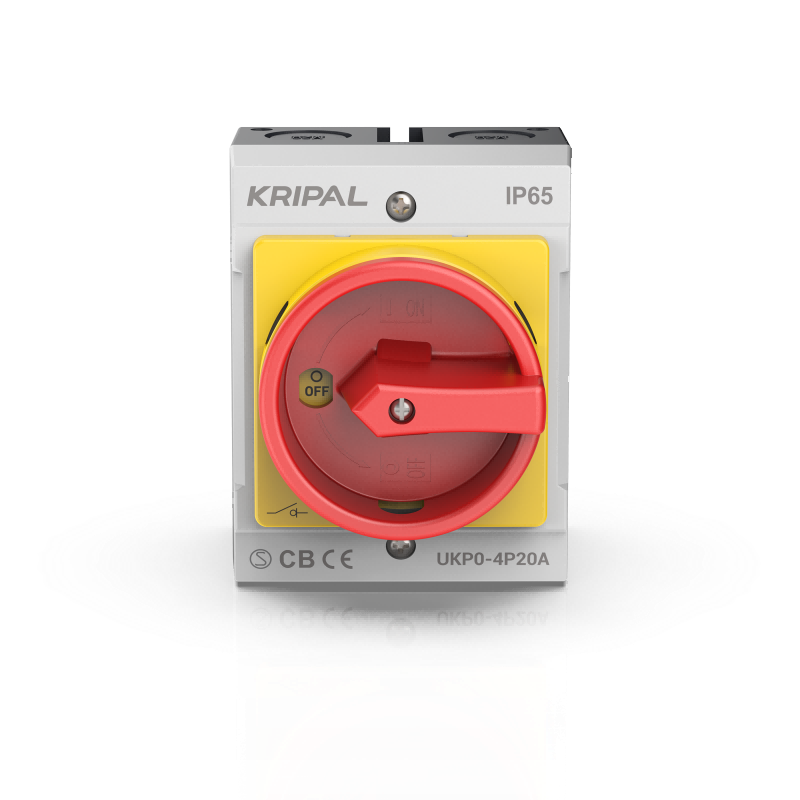
Ever noticed a large switch near an air conditioning unit or an industrial machine? That is often an AC isolator switch, a humble but crucial device for electrical safety. AC isolators and switches are designed to completely disconnect a circuit from the power source, providing a visible assurance that no electricity is flowing.
What Is an AC Isolation Switch?
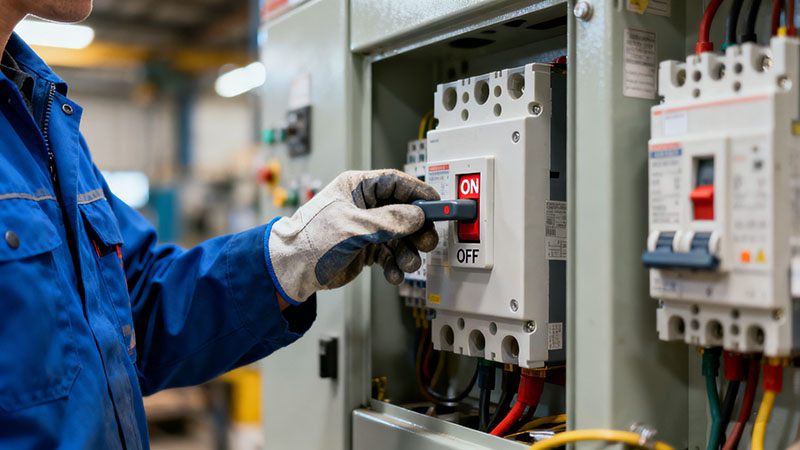
An AC isolation switch, also known as an AC isolator, is an electrical switchgear device used to isolate a portion of an electrical circuit. In simple terms, it disconnects a circuit from the main power supply so that work can be done safely on that circuit. When switched off, the AC isolator creates a visible air gap between its contacts, indicating that the circuit is fully de-energised.
This physical separation ensures that maintenance personnel can work on wiring or equipment without any chance of electric shock. Unlike a standard light switch, an isolator is typically intended for infrequent operation, mainly for safety isolation during service or emergencies. Importantly, many isolator switches are built to handle the full system voltage and current, but they are usually operated when the load is off or at no load to avoid undue stress on the contacts.
Key characteristics of AC isolator switches
Complete Disconnection
They ensure a circuit is totally de-energized for maintenance or emergency isolation. When you flip an AC isolator to the off position, its internal contacts fully separate. In many designs, you can actually see the contact blades withdraw, leaving a clear gap. This visible break gives confidence that the circuit is open.
No Onboard Overcurrent Protection
A basic isolator switch usually does not contain fuses or breakers. Any overcurrent protection, like fuses or circuit breakers, is typically provided separately in the system. However, there are fused isolator switches that combine a switch and fuse in one unit.
Manual Operation
AC isolators are manually operated devices. They often have a rotary handle or a hefty lever. The design focuses on a robust mechanism that can endure the occasional high-current switching and provide a reliable, repeatable action. Some isolators come with padlock holes on the handle so that they can be locked out in the off position.
Standards Compliance
These switches are built to meet electrical safety standards such as IEC 60947-3 for low-voltage switches. Compliance ensures they can handle the rated AC voltage and current safely, and that they have adequate insulation and spacing to create that safe air gap.
How AC Isolator Switches Work
AC isolators work on the principle of air-gap isolation. By mechanically separating the conducting parts, they ensure no current can pass. Some isolators are rated for “load break”, meaning they can be safely opened while current is flowing. Others are strictly intended for off-load operation, meaning you should only open them after the current is interrupted by another device.
In many isolators, especially higher-current ones, the switch uses what’s called a knife-blade or bridge contact system. A metal blade or bridge moves when you operate the handle. In the ON position, the blade is inserted firmly into fixed contacts (jaws), completing the circuit.
In the OFF position, the blade is pulled out, leaving a visible gap. This action is often quick and forceful, with spring mechanisms to assist, so that any electrical arc that forms when breaking the current is extinguished rapidly.
AC Isolators vs Other Switchgear
It’s helpful to understand how an isolator differs from other common electrical devices like circuit breakers, standard switches, or fuses. These components often work together in an electrical system, each serving a distinct purpose.
Isolator vs Circuit Breaker
A circuit breaker automatically trips (opens) when a fault like an overload or short circuit occurs. Circuit breakers are built to interrupt current under load or fault conditions and can be reset after tripping. An isolator, on the other hand, has no automatic trip mechanism and is generally operated manually. Its role is to isolate a circuit after the current has been interrupted, or to provide a point of disconnection.
In fact, isolators are typically used in conjunction with breakers: the breaker handles the unsafe surge of fault current, and once the system is tripped and safe, the isolator is opened to ensure the circuit remains completely off while work is done.
Another key difference is visible isolation. When you open an isolator, you often can see that the contacts are apart, which is a reassuring visual cue. A breaker may show an “off” position, but you cannot see the internal contacts. Thus, isolators provide an extra level of certainty.
Isolator vs Load Switch
A load switch, or disconnect switch, is very similar to an isolator in construction, but it is explicitly rated to make or break the circuit at full load current on a regular basis.
Many isolator designs are actually load-break switches, which means they can be operated while current is flowing within their rating. If an isolator is labeled as a switch-disconnector per standards like IEC 60947-3, it means it has been tested for making and breaking at its rated current.
If not, it should only be used after the load is removed. In casual usage, the terms overlap. You might hear “isolator” and “disconnect switch” used interchangeably for devices that safely cut power.
Fuses or Breakers vs Fused Isolator Switches
A fuse is a thin metal link that melts when current is too high, thereby opening the circuit. A fused isolator switch combines the isolation function with fuse protection in one unit.
Think of it as an isolator that also blows a fuse if a fault occurs. For example, a fused disconnect at a main panel will let you manually open the switch for isolation, and if a severe fault happens, the fuse will blow to protect the circuit.
Compared to using a separate fuse and switch, the fused isolator design can save space and ensure that the circuit is both isolated and protected at the same point.
However, after a fault you’ll need to replace the fuses. Designers often choose fused switch-disconnectors for feeders or branch circuits where a solid, reliable main switch is needed along with overcurrent protection.
Difference Between AC and DC Isolator Switches
AC and DC isolator switches both serve the same purpose, but they differ significantly because AC and DC behave differently. AC reverses direction 50–60 times per second and naturally passes through a zero-voltage point, which helps extinguish electrical arcs during switching.
DC flows continuously with no zero-crossing, making arc interruption much more difficult. For this reason, DC isolators require enhanced arc-suppression designs, such as wider contact gaps, magnetic blowout structures, or multiple break points.
Voltage and Ratings Differ
AC isolators commonly handle 240–415 V AC, or up to 690 V AC industrially, while DC isolators in solar systems frequently manage 600–1500 V DC. A switch may carry the same current in AC and DC, but its DC breaking capacity is always lower. Using an AC isolator in a DC circuit is unsafe because it may not interrupt the arc properly.
Pole Configurations Vary
AC isolators may be 2-pole or 4-pole depending on single- or three-phase systems. DC isolators typically break both positive and negative conductors simultaneously. In practice, DC isolators are more robust, and while they can often be used for AC, the reverse is not recommended.
Tips for Selecting the Right Isolation Switch
- Identify whether the system is AC or DC.
- Verify voltage and current ratings match the application.
- Choose the correct pole configuration (AC: 2–4 poles; DC: 2 poles).
- Select fused or non-fused based on protection needs.
- For outdoor use, ensure IP65, UV resistance, and IEC certification.
- Confirm proper mounting compatibility.
Conclusion
To recap, an AC isolator provides a reliable way to cut off power and safely isolate a circuit. Proper isolation is never just a formality—it’s a lifesaving measure that prevents electric shocks, equipment damage, and serious accidents. A simple turn of the isolator switch ensures power stays exactly where it should be.
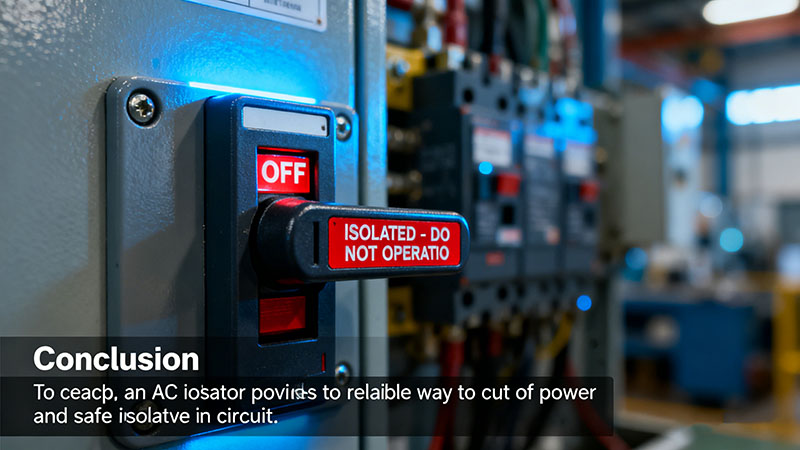
Kripal manufactures professional-grade isolators and circuit breakers. Contact us anytime for inquiries or more information. We’re here to support your electrical safety needs.
Related Resources
Explore News >


How can we assist you?
Tell us a bit more so we can route your request to the right expert.