Search
Surge Protection Device
KRIPAL offers a diverse range of modular DC Surge Protective Devices (SPDs).
KRIPAL offers a diverse range of modular DC Surge Protective Devices (SPDs). The SPI, SPB, SPC, and SPD series are designed for applications requiring Class B,Class C and Class D lightning protection, respectively. They are utilized for equipotential bonding during lightning events and comply with international standards including EN 50539-11:2013, IEC 61643-1, and GB/T 18802.1.
Leveraging superior design capabilities, this series incorporates high-performance varistors that respond within nanoseconds, effectively suppressing the impact of lightning strikes on photovoltaic systems.
Get A Quote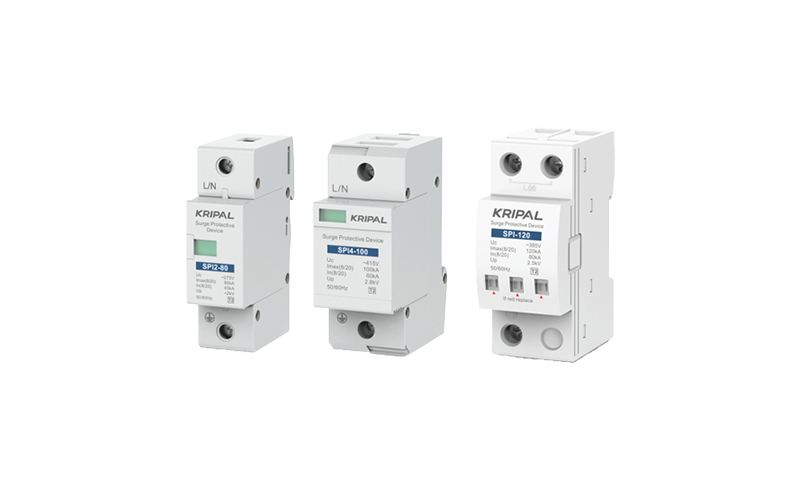
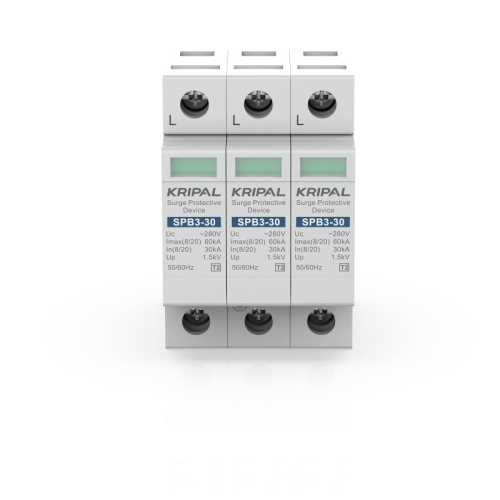
SPB Series AC Power Surge Protector 3Pole 280V SPD 30kA~60kA Surge Arrester
The SPB Series Class B SPD is designed for 50/60Hz AC systems up to 1000V, supporting TT, IT, TN-S, TN-C-S, and PV AC/DC power networks.
View DetailsKRIPAL offers a diverse range of modular DC Surge
SPI Series (SPI-150, SPI-120, SPI-100, SPI-80, SPI-60)
Designed for Class B Lightning Protection, the SPI series provides equipotential bonding during lightning events.
Models SPI-150, SPI-120, and SPI-100 are typically installed at the boundaries between LPZ0A/LPZ0B and LPZ1 zones.
Models SPI-80 and SPI-60 are commonly installed in low-voltage main distribution cabinets where underground conduits enter the building.
SPB Series (SPB5-25, SPB3-25)
This series is engineered for Class B Lightning Protection, ensuring equipotential bonding. These devices are installed at the boundaries of LPZ0A, LPZ0B, and LPZ1 zones and are typically housed in the main low-voltage distribution cabinet for incoming underground lines.
KRIPAL Modular DC Surge Protective Devices
SPC Series (SPC-20, SPC-15, SPC5-20, SPC5-15)
These products are suitable for Class C Lightning Protection and facilitate equipotential bonding. Installed at the boundaries of LPZ1, LPZ2, and LPZ3 zones, they are commonly used in:
- Floor distribution panels
- Computer centers
- Telecom rooms
- Elevator control rooms
- Variable Frequency Drive (VFD) control rooms
- Hospital operating rooms, ICUs, and areas with electronic medical equipment
- For dispersed villas, the SPC should be installed in the household distribution box.
Latest Blog Of Surge Protection Device
Explore Solution >KRIPAL Modular DC Surge Protective Devices
SPD Series (SPD, SPD5)
This series is applicable for Class D Lightning Protection and is used for equipotential bonding. Installed at the boundaries of LPZ1, LPZ2, and LPZ3 zones, they are typically mounted in:
- Household distribution boxes
- Computer centers
- In front of information equipment, electronic devices, control equipment, or the nearest socket outlet boxes.
Frequently Asked Questions
Explore FAQ >A KRIPAL Surge Protective Device is a modular device designed to protect electrical systems from transient overvoltages caused by lightning strikes and electrical switching. It incorporates high-performance varistors that react to voltage spikes within nanoseconds. This incredibly fast response time ensures that dangerous surge energy is diverted to the ground before it can travel into your sensitive equipment, effectively suppressing the damaging impact of surges on your systems and appliances.
- Class B (SPI & SPB Series): The first line of defense (Lightning Current Arrester). These are designed to handle the largest surge currents, such as those from direct or nearby lightning strikes. They are installed at the main service entrance (e.g., boundaries between LPZ0 and LPZ1).
- Class C (SPC Series): The secondary protection (Surge Arrester). They further reduce the surge energy that passes the first stage and protect sub-distribution circuits (e.g., boundaries between LPZ1 and LPZ2), such as floor distribution panels.
- Class D (SPD Series): The fine protection (Terminal Equipment Protector). Installed very close to sensitive equipment, they provide the final level of protection, clamping the voltage to a safe level for devices like computers, medical equipment, and control systems.
- For Main Service Entries (LPZ0 to LPZ1): Use Class B models like the SPI-150, SPI-120, or SPI-100 for overhead lines, or SPI-80, SPI-60, and the SPB series for incoming underground lines in the main low-voltage distribution cabinet.
- For Sub-Distribution Boards (LPZ1 to LPZ2): Use Class C models like the SPC series in floor distribution panels, computer centers, and control rooms.
- For Point-of-Use Protection (LPZ2 to LPZ3): Use Class D models like the SPD series in household distribution boxes or directly in front of sensitive electronic devices.
Equipotential bonding during a lightning event is critical for safety. When a surge occurs, it can create dangerous voltage differences between different electrical systems (e.g., power lines, data lines).
KRIPAL SPDs are utilized for equipotential bonding by connecting these systems to a common ground reference at the point they enter a building or a protected zone. This "clamps" them to the same voltage potential during a surge, preventing destructive currents from flowing between them and protecting both equipment and personnel.
KRIPAL AC SPDs are engineered to meet major international safety and performance standards, including EN 50539-11:2013, IEC 61643-1, and GB/T 18802.1. This compliance is your assurance that our products have been tested and certified to perform reliably and safely, providing peace of mind for global projects.
- Floor distribution panels
- Computer centers and server rooms
- Telecom rooms
- Elevator control rooms
- Variable Frequency Drive (VFD) control rooms
- Hospital operating rooms and ICUs
- The household distribution box of a dispersed villa
How can we assist you?
Tell us a bit more so we can route your request to the right expert.