Home > Circuit Breakers > Air Circuit Breaker

Air Circuit Breaker

High-Capacity Protection from a Professional Factory

KRIPAL Air Circuit Breakers are designed for main low-voltage distribution boards where high short-circuit levels and large load currents must be controlled with confidence. Engineered for demanding environments, our ACBs provide stable protection for busbars and feeders in systems with rated currents up to 6300A and above. Installed in switchboards, main distribution panels and other critical loads, KRIPAL ACBs help keep industrial and infrastructure power supplies safe, stable and continuous.

Get A Quote
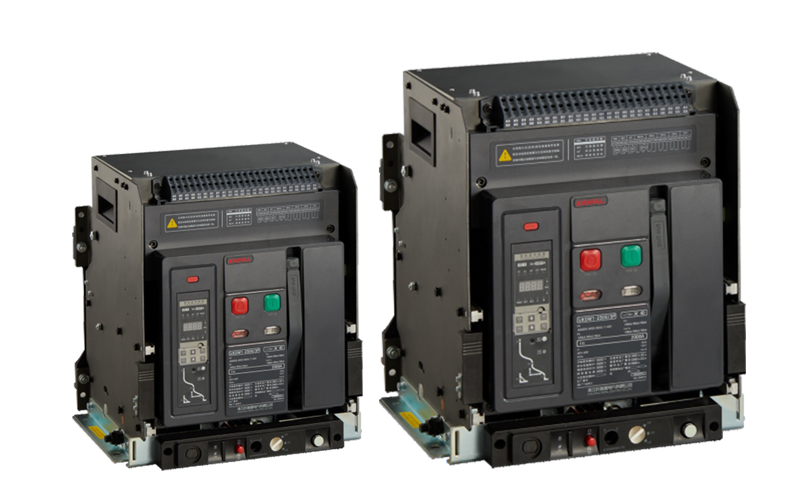
Air Circuit Breaker

Download Catalog

For more information, please download the album.

Intelligent Universal Air Circuit Breakers

KRIPAL Air Circuit Breakers are typically installed at the incoming side of low-voltage switchboards or as key outgoing feeders. They are built to:

  • Distribute power safely in three-phase AC networks
  • Protect lines and equipment against overload, short-circuit, and ground fault
  • Provide visible and measurable isolation when maintenance is required
  • Integrate easily into intelligent power management and automation systems

Available in 3-pole and 4-pole versions, KRIPAL ACBs give switchboard designers the flexibility to match different installation methods, protection concepts, and maintenance strategies.

Wholesale Air Circuit Breaker Supplier & Factory

KRIPAL Air Circuit Breakers (ACBs) are built for main low-voltage distribution where large loads and high fault levels must be controlled safely. As a dedicated manufacturer and factory, we supply ACBs that combine strong breaking capacity, intelligent protection, and long mechanical life for industrial, commercial, and infrastructure projects.

Designed for use as main incomers or key outgoing feeders, KRIPAL ACBs help protect transformers, busbars, and critical loads against overloads, short circuits, and earth faults. Working as a wholesale air circuit breaker supplier, KRIPAL supports OEM, panel builder, and distributor customers with stable quality, competitive pricing, and consistent delivery times. Customized labeling, settings, and accessory combinations can be provided from the factory, helping you match local standards and build a complete, market-ready ACB solution under one partner.
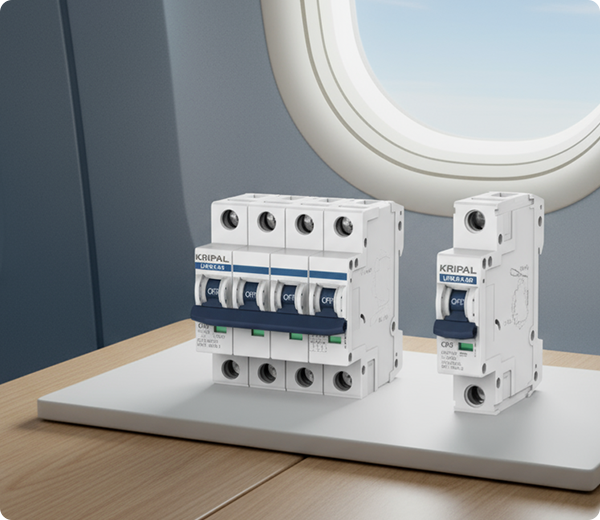
Wholesale Air Circuit Breaker Supplier & Factory

Typical Applications

KRIPAL ACBs are used wherever high current and high reliability are required, including:

  • Main low-voltage distribution boards in factories and industrial plants
  • Commercial building power centers, such as malls, hospitals, airports, and office towers
  • Infrastructure projects such as water treatment, transportation, and public utilities
  • Data centers and other critical facilities where selective protection and quick fault clearing are essential

From new installations to switchboard upgrades, KRIPAL Air Circuit Breakers provide a dependable solution for system protection and control.

Frequently Asked Questions

Explore FAQ >
An Air Circuit Breaker (ACB) is an electrical protection device used for main power distribution in low-voltage electrical systems. It operates in air (at atmospheric pressure) and is designed to protect electrical circuits and equipment from damage caused by overloads, short-circuits, and ground faults. ACBs are typically employed as the incoming main breaker in large commercial buildings, industrial plants, and critical infrastructure due to their high breaking capacity and robust construction.
Air Circuit Breakers offer several important advantages in high-current applications. They provide very high breaking capacity, so they can safely interrupt extremely high fault currents from large power sources without damaging the system. Their protection functions are highly adjustable and precise, covering overload, short-circuit, and ground fault protection to match the needs of complex distribution networks. ACBs are also built for durability and long service life, allowing frequent operation with minimal maintenance. Modern electronic ACBs can be equipped with digital trip units and communication options such as Modbus or Profibus, making it easy to integrate them into energy management and automation systems for real-time monitoring, control, and data analysis.
The main differences between an ACB and an MCCB are found in their current range, breaking capacity, and construction. Air Circuit Breakers are designed for much higher rated currents, typically from several hundred amperes up to several thousand amperes, and they offer significantly higher breaking capacity. They usually have a larger, openable frame structure that can be inspected, serviced, and fitted with accessories more easily. By contrast, MCCBs are enclosed in a molded case and are generally not intended to be serviced internally. In terms of application, ACBs are mainly used at the top of the distribution hierarchy for main power distribution and the protection of large feeders, while MCCBs are commonly used downstream for sub-circuits, branch feeders, and individual large loads.
Modern electronic air circuit breakers provide a wide range of adjustable protection settings to support selective coordination within the system. Typically, users can set the long-time pickup and delay for overload protection, adjusting both the current level at which the breaker responds and the time it takes to trip. Short-time settings can be configured to manage short-circuit protection with a controlled delay, helping coordinate with downstream devices. Instantaneous trip settings define the threshold for very high fault currents that require immediate interruption without intentional delay. Many electronic ACBs also offer adjustable ground-fault protection, allowing users to set both the pickup current and reaction time for earth leakage faults. Together, these adjustable functions give designers and engineers the flexibility to fine-tune protection to match the installation.
Air Circuit Breakers are typically used wherever power demand is high and reliability is critical. They are standard in main low-voltage switchboards for industrial facilities, data centers, and large commercial buildings, where they protect the main incoming lines and large feeders. ACBs are also widely used in power generation and distribution systems to safeguard transformers and key distribution buses. In marine and offshore environments, they are applied in shipboard power systems and platform installations where robust and maintainable breakers are essential. Large infrastructure projects, such as hospitals, airports, rail networks, and public utilities, also rely on ACBs to ensure stable, safe, and easily serviceable power distribution.
Selecting the right air circuit breaker starts with defining the rated operational current so that the device can carry the maximum continuous load current under normal conditions. You then need to confirm the ultimate breaking capacity to ensure the ACB can safely interrupt the highest possible short-circuit current at the installation point. It is also important to choose the correct number of poles, usually three-pole or four-pole, based on whether you need to switch the neutral conductor. The type of trip unit must be aligned with your protection and monitoring needs, including whether you require basic protection only or advanced electronic functions with communication capabilities. For critical or complex projects, it is strongly recommended to work with a qualified electrical engineer or consult a KRIPAL technical specialist to verify coordination, safety margins, and compliance with relevant standards.
A “draw-out” design means the air circuit breaker can be moved mechanically between defined positions inside its cradle or enclosure, usually referred to as connect, test, and disconnect. In the connect position, the main power contacts are fully engaged and the circuit is live. In the test position, the power contacts are isolated but the control circuit remains energized, allowing safe functional testing of the breaker and its accessories without energizing the load. In the disconnect position, the breaker is completely isolated from the power source so maintenance staff can work safely. This design greatly reduces downtime, simplifies inspection and replacement, and improves personnel safety during service operations.

How can we assist you?

Tell us a bit more so we can route your request to the right expert.