Search
Knowledge Center
Low-Consumption Contactors Explained: Reducing Power Loss in Modern Electrical Systems
Learn how low-consumption contactors cut holding power by up to 80%, reduce panel heat, extend component life for motor, HVAC & solar energy systems.
 May 25, 2026
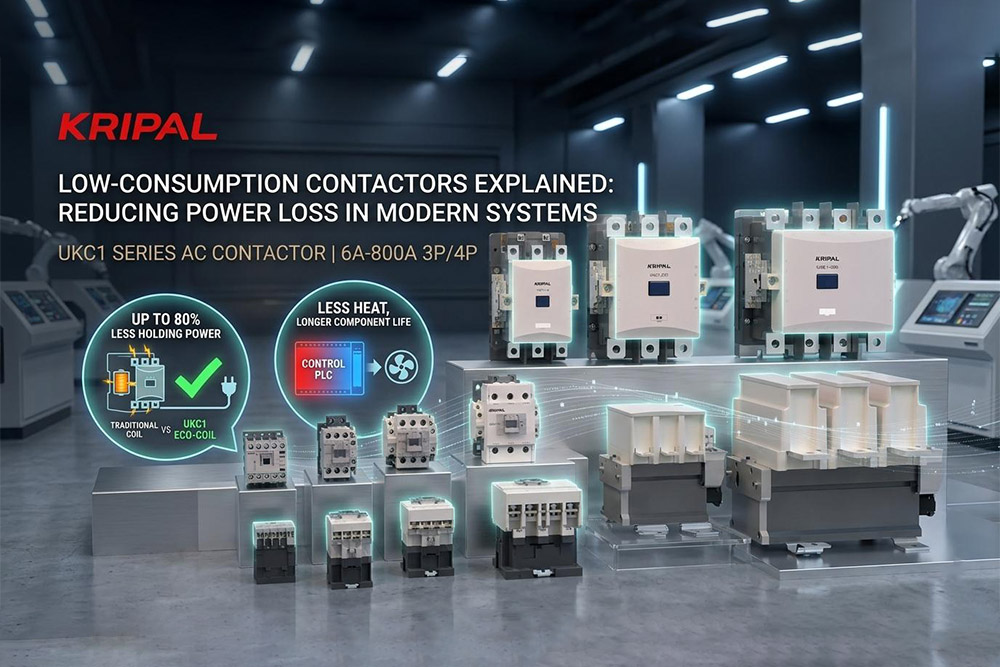
As industries continue to focus on energy efficiency, every component within an electrical system is being examined for opportunities to reduce power consumption. While motors, drives, and transformers often receive the most attention, switching devices such as contactors also play an important role in overall system performance.
Traditional contactors require continuous coil power to remain energized. In facilities operating around the clock, this constant energy draw can add up over time. Low-consumption contactors are designed to address this challenge by significantly reducing coil power requirements while maintaining reliable switching performance.
From motor control centers and HVAC installations to renewable energy systems and industrial automation, these contactors help lower operating costs, reduce heat generation, and improve energy efficiency across a wide range of applications.
Key Takeaways
- Low-consumption contactors require significantly less coil power than conventional contactors.
- Reduced coil energy demand helps lower overall electricity consumption.
- Lower power loss means less heat generation inside electrical panels.
- Energy-efficient contactors can extend component life by reducing thermal stress.
- They are widely used in motor control systems, HVAC equipment, renewable energy installations, and industrial automation.
- Selecting the correct contactor involves considering load type, switching frequency, voltage requirements, and environmental conditions.
Understanding How Contactors Consume Energy
An electrical contactor is an electromechanical switching device used to control power circuits. When voltage is applied to the coil, an electromagnetic field is generated, pulling the contacts together and allowing current to flow to the load.
Although the coil itself consumes relatively little energy compared to large motors or industrial equipment, it often remains energized for extended periods. In many applications, contactors stay engaged for hours or even continuously throughout the day.
For example, contactors controlling pumps, ventilation systems, compressors, conveyor belts, or industrial machinery may remain active during entire production shifts. When multiple contactors operate simultaneously, their combined energy consumption becomes more noticeable.
Traditional AC contactors can consume several watts of holding power continuously. Over months and years of operation, this energy use contributes to unnecessary power losses and higher operating expenses.
What Makes a Contactor Low Consumption?
Low-consumption contactors are engineered to reduce the amount of energy required to energize and hold the coil.
Instead of continuously drawing the same level of power, many modern designs use electronic coil control technology. These systems provide a higher initial current to close the contacts quickly and then automatically reduce power to a lower holding level once the contactor is engaged.
This approach offers several benefits:
- Lower continuous energy consumption
- Reduced internal heat generation
- Improved efficiency of electrical panels
- Lower burden on control transformers and power supplies
- Enhanced reliability under varying voltage conditions
Some advanced contactors can reduce holding power consumption by more than 80 percent compared to conventional designs, making them particularly attractive for installations with numerous contactors operating simultaneously.
How Low-Consumption Contactors Reduce Power Loss
Lower Coil Power Demand
The most direct source of savings comes from reduced coil energy consumption.
A conventional contactor coil continuously draws electrical power while energized. Low-consumption designs minimize this requirement, resulting in less wasted energy throughout normal operation.
While the savings from a single contactor may appear modest, large facilities often operate dozens or even hundreds of contactors. The cumulative reduction in energy usage can become significant over time.
Reduced Heat Generation
Electrical energy that is not converted into useful work often becomes heat.
Traditional contactor coils generate heat while energized, raising temperatures inside electrical cabinets. Excess heat can negatively affect other components such as relays, drives, PLCs, circuit breakers, and power supplies.
Low-consumption contactors generate less heat because they require less holding power. Cooler panels generally contribute to:
- Improved equipment reliability
- Reduced cooling requirements
- Longer component lifespan
- Better overall system efficiency
Lower Transformer and Power Supply Loads
Control transformers and power supplies must provide sufficient power for all connected devices.
When contactor coils require less current, the load placed on these supporting components decreases. This can improve overall system efficiency and may even allow designers to use smaller auxiliary power equipment in certain applications.
Improved Energy Management
Modern facilities increasingly monitor energy usage at a detailed level. Small efficiency improvements across multiple systems often combine to create substantial reductions in total power consumption.
Low-consumption contactors align well with energy management strategies because they eliminate a source of continuous electrical waste without affecting operational performance.
Applications That Benefit Most
Motor Control Systems
Motor control remains one of the most common applications for contactors.
Industrial motors are used in pumps, compressors, fans, conveyors, mixers, and manufacturing equipment. Since contactors frequently remain energized while motors are operating, reducing coil power consumption can generate measurable energy savings over time.
Facilities with multiple motor starters often see the greatest benefit from adopting energy-efficient contactors.
HVAC Systems
Heating, ventilation, and air-conditioning equipment typically operates for long periods.
Fans, chillers, air handling units, and compressors rely on contactors for switching and protection. Lower coil power requirements help reduce overall building energy consumption while minimizing heat buildup within control panels.
Renewable Energy Installations
Solar and energy storage systems increasingly use contactors for switching, isolation, and protection functions.
Because renewable energy projects are designed around maximizing efficiency, reducing auxiliary power consumption becomes an attractive objective. Low-consumption contactors help minimize internal losses while supporting reliable system operation.
Industrial Automation
Automated production lines often contain numerous contactors controlling different processes.
Even small reductions in power usage per device can accumulate into meaningful savings across an entire facility. Lower heat generation also supports more stable operation of sensitive control equipment.
Additional Benefits Beyond Energy Savings
The advantages of low-consumption contactors extend beyond reduced electricity usage.
Longer Equipment Life
Heat is one of the primary factors affecting electrical component aging.
By operating at lower temperatures, electrical panels experience less thermal stress, which may contribute to longer service life for various components.
Greater Operational Reliability
Advanced electronic coils often maintain stable performance across wider voltage ranges.
This can help reduce nuisance dropouts and improve contactor operation in environments where control voltage fluctuations occur.
Simplified Panel Design
Lower power requirements can simplify electrical panel design by reducing demands on transformers, wiring, and auxiliary power systems.
Designers may gain greater flexibility when planning control circuits, especially in large installations.
Choosing the Right Low-Consumption Contactor
Selecting an appropriate contactor involves more than simply comparing coil power ratings.
Several factors should be evaluated:
| Selection Factor | Considerations |
| Load Characteristics | Different loads place different demands on contactors. Common examples include induction motors, resistive heating equipment, lighting systems, capacitor banks, and renewable energy equipment. The contactor should be rated for the specific load type. |
| Coil Voltage | Verify that the contactor is compatible with the control voltage used in the system, whether AC or DC. Many modern contactors support wide voltage ranges for greater installation flexibility. |
| Switching Frequency | Applications with frequent switching operations may require contactors designed for higher electrical and mechanical endurance. |
| Environmental Conditions | Factors such as dust, humidity, vibration, and extreme temperatures can affect performance. Selecting a contactor designed for the operating environment helps ensure long-term reliability. |
| Compliance and Standards | Choose products that comply with relevant international standards and certifications required for the intended installation. |
Conclusion
Energy efficiency is no longer limited to major equipment such as motors and drives. Attention is increasingly shifting toward every component that contributes to system performance.
Low-consumption contactors demonstrate how relatively small improvements can create meaningful results when applied across an entire facility.
By reducing coil power demand, minimizing heat generation, and supporting efficient system design, these devices help electrical installations operate more effectively while lowering unnecessary energy losses. Looking for a more energy efficient control solution? I invite you to explore our range of low consumption contactors today.
FAQ
Q1 What is a low-consumption contactor?
A low-consumption contactor is a contactor designed to use less coil power during operation. Many models utilize electronic coil management technology to reduce holding power after the contacts have closed.
Q2 How much energy can low-consumption contactors save?
Savings vary depending on the number of contactors, operating hours, and system design. In large facilities with continuously energized contactors, the cumulative reduction in energy consumption can be significant.
Q3 Are low-consumption contactors suitable for motor control applications?
Yes. They are commonly used in motor starters, pumps, compressors, fans, and conveyor systems where contactors remain energized for extended periods.
Q4 Do low-consumption contactors improve equipment lifespan?
By generating less heat inside electrical panels, these contactors can help reduce thermal stress on surrounding components, potentially contributing to longer equipment life.
Q5 Can they be used in solar energy systems?
Yes. Low-consumption contactors are frequently used in solar installations, battery energy storage systems, and other renewable energy applications where minimizing auxiliary power losses is desirable.
Q6 Are low-consumption contactors more expensive than traditional contactors?
The initial purchase cost may be slightly higher in some cases. However, reduced energy consumption, lower heat generation, and potential maintenance benefits can help offset the investment over the long term.
Q7 What industries commonly use low-consumption contactors?
They are widely used in manufacturing, building automation, HVAC systems, water treatment facilities, renewable energy projects, transportation infrastructure, and industrial automation systems.
Related Resources
Explore Knowledge Center >

Need a matching KRIPAL product?
Share voltage, quantity and destination. An engineer will reply with options and lead time.