Search
Knowledge Center
Understanding DC MCCBs and DC MCBs
Compare DC MCCBs and DC MCBs for circuit protection. Learn how to choose the right breaker based on current, voltage, and application for solar or ESS.
 April 14, 2026
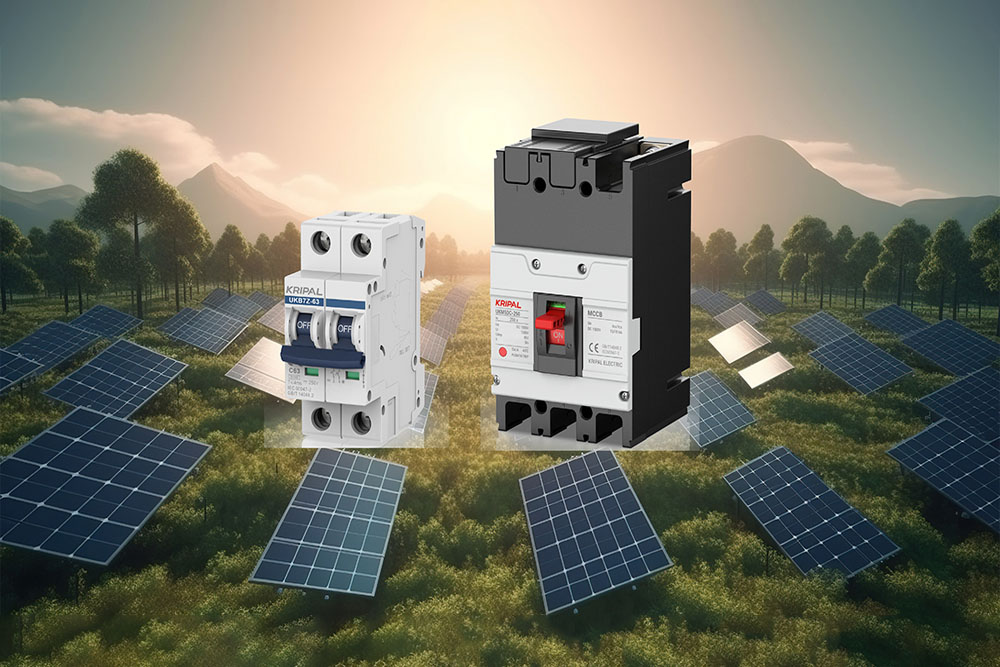
In modern electrical systems, protecting circuits from overload and short-circuit damage is extremely important, and DC MCCBs and DC MCBs are two devices used for this purpose. By understanding their similarities and differences, we can make better decisions when selecting the appropriate equipment to address various electrical protection needs.
Key Takeaways
- DC MCCBs and DC MCBs protect DC circuits from overloads and short circuits.
- MCCBs suit high current and main circuits, while MCBs are for low-current branches.
- Choose the right breaker based on voltage, current, and protection needs.
What is a DC MCCB?
A DC MCCB is an electrical device used for protecting DC circuits. Its main function is to automatically cut off the current when there is an overload, short circuit, or other faults, preventing equipment damage or safety incidents.
It is suitable for DC systems that require higher power, such as photovoltaic power generation, energy storage systems, and industrial DC distribution.
At the same time, DC MCCBs are designed to effectively address the issue of DC arcs that are difficult to extinguish, ensuring the disconnection process is safe and reliable.
What is a DC MCB?
A DC MCB is a device used for protecting DC circuits, primarily to cut off the current when an overload or short circuit occurs, ensuring the safety of the circuit and equipment.
It is compact, easy to install, and typically used in low-current, terminal distribution applications, such as photovoltaic systems, communication equipment, and small DC distribution systems. Compared to other circuit breakers, the DC MCB is more suitable for fine-tuning and branch circuit protection.
Similarities between DC MCCBs and DC MCBs
DC MCCBs and DC MCBs both protect DC circuits from overloads and short circuits, automatically disconnecting the circuit to prevent damage.
They are commonly used in environments like photovoltaic systems, energy storage, and EV charging stations. Additionally, both must meet international safety standards, ensuring reliable and safe operation.
Both protect the circuit
Both are electrical protection devices used to provide overload and short-circuit protection in DC systems. When the current is abnormal, they can automatically disconnect the circuit to prevent equipment damage or safety issues.
Similar operating environments and application scenarios
Both DC MCCBs and DC MCBs are widely used in DC power systems, such as photovoltaic power generation systems, energy storage systems, electric vehicle charging facilities, and communication power systems. They are both important components to ensure the safe operation of DC circuits.
Similar safety standards and certification requirements
Both devices usually need to meet relevant international or industry standards. Their design and manufacturing must comply with specific safety regulations and certification requirements to ensure their reliability and safety in actual applications.
Main Differences between DC MCCBs and DC MCBs
DC MCCBs and DC MCBs serve similar protection functions but differ in rated current, breaking capacity, operating voltage, installation methods, and protection features. These differences determine their suitability for various applications and circuit protection needs.
Rated Current and Breaking Capacity
DC MCCBs are typically used in medium to high-current applications with a large rated current range and higher breaking capacity, capable of interrupting larger short-circuit currents. DC MCBs, on the other hand, are usually used for low-current circuits with lower breaking capacity, mainly for terminal protection.
While standard MCBs like the UKB7Z series handle terminal loads up to 63A, large-scale industrial systems require the robust frame of an MCCB. For instance, the UKM5DC series can manage currents up to 630A, making it the ideal choice for main DC distribution boards.
Operating Voltage and Load Capacity
DC MCCBs can withstand higher operating voltages and larger load powers, making them suitable for main circuits or main distribution systems. DC MCBs are used for lower voltage branch circuits, with smaller load capacity, and are more suitable for fine-tuned branch protection.
Voltage demand is critical in solar design. For high-voltage strings, KRIPAL’s UKB8Z-63 MCB supports up to DC 1200V, while the UKM5DC MCCB is specifically engineered for modern 1500V utility-scale systems, offering superior insulation (Ui 1500V).
Installation Methods and Sizes
DC MCCBs are larger in size and are typically installed in fixed or drawer-type configurations, commonly found in distribution cabinets or control panels. DC MCBs are smaller, typically installed on standard rails (DIN rails), making them easier to deploy quickly in distribution boxes.
Protection Characteristics and Trigger Mechanism
DC MCCBs are generally equipped with more complex protection units, with adjustable protection parameters, offering more flexibility. DC MCBs, however, often feature fixed thermal-magnetic trip designs, with limited adjustability, making them more suitable for standardized applications.
| Feature | DC MCCB | DC MCB |
| Rated Current | Medium to high (tens to thousands of amperes) | Low (few amperes to tens of amperes) |
| Breaking Capacity | Higher, can interrupt large short-circuit currents | Lower, for smaller circuits |
| Operating Voltage | Higher voltage tolerance | Lower voltage tolerance |
| Load Capacity | Larger load power capacity | Smaller load capacity |
| Installation | Larger, fixed or drawer-type | Smaller, DIN rail mounted |
| Protection Mechanism | Adjustable (thermal-magnetic/electronic) | Fixed (thermal-magnetic B/C/D curves) |
Safety is in the details. Our DC breakers, such as the UKB7Z, feature specialized DC Arc Extinguishing Technology. For larger systems, the UKM32 series supports extensive accessories like shunt trips and motorized operating mechanisms, allowing for remote control and automated safety management.
Application Scenarios for DC MCCBs and DC MCBs
MCCB
DC MCCBs are mainly used in medium-to-high-power, main circuit, or critical protection positions, such as:
- Combiner boxes and inverter front ends in photovoltaic power generation systems
- Main circuit protection for energy storage systems
- Main power protection for electric vehicle charging stations
- Main switches or feeder protection in industrial DC distribution systems
- DC main distribution in data centers or communication rooms
These scenarios usually involve large currents and high capacities, requiring high breaking capacity and stability.
MCB
DC MCBs are more commonly used in low-power, branch circuits, or terminal protection, such as:
- Module strings or branch protection in photovoltaic systems
- Branch circuits in small or home energy storage systems
- Terminal protection for communication equipment and power modules
- Branch protection in low-voltage DC distribution boxes
- Internal circuit protection in electric vehicles or small devices
Summary: A Deeper Understanding of the Differences Between the Two
Both DC MCCBs and DC MCBs are used for protecting DC circuits, but they serve different purposes. DC MCCBs are more suitable for large currents and main circuit protection, while DC MCBs are better for small currents and branch protection.
Choosing the right type ensures the safe and stable operation of the system. KRIPAL offers high-quality, cost-effective DC MCCBs and MCBs, welcome to visit the website for selection.
Quick Comparison: KRIPAL DC MCCB vs DC MCB Series
To help you select the most suitable protection for your PV or ESS project, here is a detailed breakdown of KRIPAL’s flagship DC series:
| Feature | UKM32-400PV (MCCB) | UKM5DC-400 (MCCB) | UKB8Z-63 (MCB) | UKB7Z-63 (MCB) |
| Main Application | Heavy-duty PV / Inverters | High-Voltage ESS / Industrial | High-Breaking Branch Circuits | Standard DC/Solar Branch |
| Rated Current (In) | 300A, 350A, 400A | 250A to 630A | 6A to 63A | 6A to 63A |
| Max Working Voltage | DC 1000V (4P) | DC 1500V (4P) | DC 1200V (4P) | DC 1000V (4P) |
| Breaking Capacity | 20kA / 50kA | 20kA (Ics=15kA) | 6kA | 6kA (6000A) |
| Impulse Voltage (Uimp) | 12kV | 8kV | 6kV | 6kV |
| Operating Temp. | -40°C to +70°C | -45°C to +70°C | Standard Industrial | Standard Industrial |
| Protection Features | Overload + Short-circuit | Overload + Short-circuit + Undervoltage | Specialized DC Arc Extinguishing | C Curve (7-15In) |
| Mounting Type | Fixed / Withdrawal | Fixed | DIN Rail | DIN Rail |
FAQs
Q: Can DC MCCBs and DC MCBs replace each other?
It is generally not recommended to replace one with the other. They are suitable for different current levels and application scenarios, and incorrect selection may affect the protection performance or even cause safety risks.
Q Why are DC circuit breakers more complex than AC circuit breakers?
DC circuits do not have a zero crossing point, and the arc is harder to extinguish, so they require more specialized designs to ensure safe disconnection.
Q How do I choose the right DC circuit breaker?
You need to consider the system voltage, rated current, breaking capacity, and specific application scenarios when selecting.
Q Are DC MCBs suitable for photovoltaic systems?
Yes, they are typically used for module strings or branch protection, while the main circuit usually uses DC MCCBs.
Q Do DC MCCBs require regular maintenance?
Yes, it is recommended to regularly check the wiring, contact status, and operational condition to ensure long-term reliable operation.