Search
Knowledge Center
How to Choose the Right Fuse Size?
Learn how to choose right fuse size for circuit safety. Step-by-step fuse rating guide covering rated current, voltage matching, and avoiding common mistakes.
 April 03, 2026
Key Takeaways
• Fuse size affects circuit safety and equipment protection.
• Selection should consider rated current, voltage, and blowing characteristics.
• Different types of circuits, such as direct current and alternating current, require different fuse specifications.
• Allowing a safety margin can prevent frequent blowing or inadequate protection.
Relationship Between Fuse, Cable, and Load
The fuse, cable, and load form a connected system in the circuit, where the load determines the current, the cable carries the current, and the fuse interrupts the current when it exceeds safe limits. This arrangement protects the load from damage and prevents the cable from overheating or causing a fire. Therefore, selecting a fuse must take both load requirements and cable capacity into account.
Determining Circuit Requirements
Calculating Circuit Operating Current
When selecting a fuse, calculate the rated current In based on the maximum steady current of the circuit, combined with the safety derating factor of the corresponding standard and the ambient temperature derating factor, and choose a fuse with a rated current greater than or equal to this calculated value to ensure reliable operation under actual working conditions.
For circuits with multiple loads, the maximum combined current should be considered. It is also important to account for startup or instantaneous currents, especially for motors, power supplies, or other devices with high inrush currents.
| Ambient Temperature | Effect on Fuse Rated Current |
| 25±5℃ | No influence on the rated current |
| Above 30℃ | Significant reduction in current-carrying capacity |
| Selection Note | The effect of ambient temperature must be considered when selecting a fuse |
Maximum Short-Circuit Current Analysis
During a short circuit or fault, the current may greatly exceed the normal operating current. Understanding the maximum short-circuit current ensures that the fuse will interrupt the circuit quickly under hazardous conditions. This analysis can be made using power source capacity, cable impedance, and load distribution, and it helps prevent cable overheating, equipment damage, or fire hazards.
Voltage Rating Matching
A fuse must have a rated voltage that is equal to or higher than the circuit voltage so that it can interrupt the current reliably. Direct current circuits require higher rated voltages because fuses may produce an arc when interrupting, whereas alternating current circuits can use the zero-crossing property of current to interrupt more easily. Ensuring proper voltage matching not only allows the fuse to function correctly but also extends the lifespan of both the fuse and the equipment.
Four Steps to Help Choose Fuse Size
Step One: Determine Rated Current
The rated current is the basis for selecting a fuse. It should be calculated based on the operating current of the load. For devices with startup or transient surge currents, such as motors or power supplies, the peak current should be considered so that the fuse can withstand normal fluctuations. Choosing the correct rated current allows the circuit to operate without unwanted interruptions.
Step Two: Select Rated Voltage
The rated voltage of the fuse must be equal to or higher than the actual circuit voltage to allow safe interruption during abnormal conditions. Alternating current and direct current circuits require different voltage ratings, because direct current fuses are more likely to produce an arc when they blow. Proper voltage selection ensures correct fuse operation and extends the life of the circuit and equipment.
Step Three: Consider Blowing Time and Operating Environment
The blowing characteristic should match the type of load. Fast-acting fuses suit electronic devices, while time-delay fuses suit motors or loads with high inrush currents. Environmental factors such as high temperature or humidity may affect fuse performance and should be considered when choosing the fuse. Matching the blowing time properly prevents frequent blowing or delayed protection and enhances circuit safety.
Step Four: Leave a Safety Margin
A safety margin should be added to account for occasional current fluctuations, typically 10% to 25% above the rated current, to prevent the fuse from blowing due to minor overloads. The margin should be considered along with load characteristics, cable capacity, and environmental conditions, allowing the circuit to remain both protected and stable.
Choosing the Right Type of Fuse
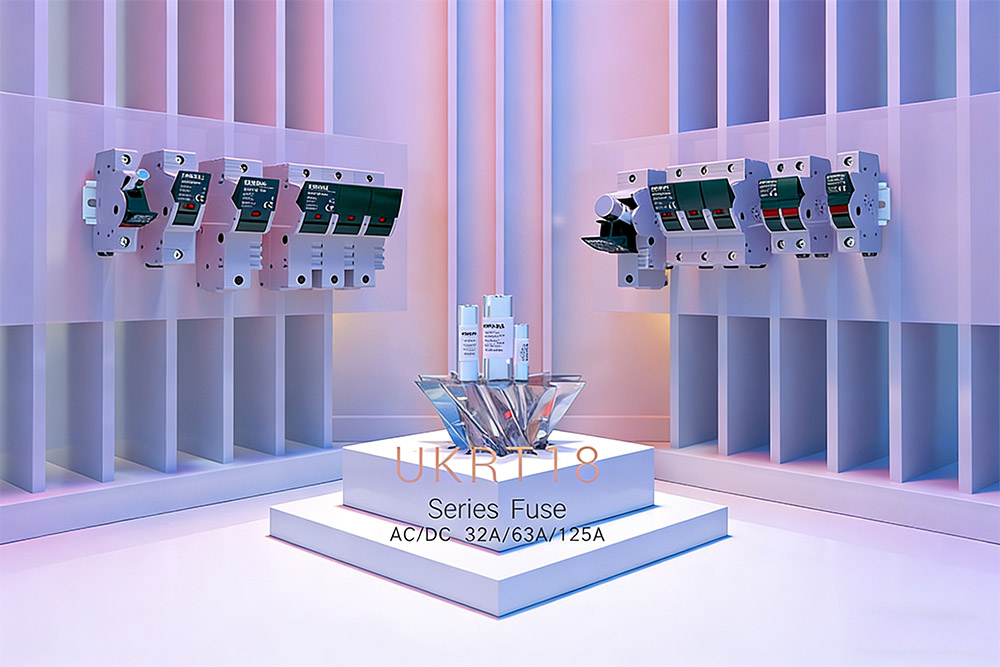
Fuses are widely used components available in a wide range of models and voltage ratings for various industrial, manufacturing and electronic applications.
Fuse types can be classified by multiple criteria, including blowing speed, AC/DC application, physical structure, usage scenario, special functions and mounting method.
| Main Category | Specific Fuse Type | Core Features & Structure | Typical Applications |
| By Blowing Speed | Ultra-Fast Acting Fuse | Instant response, no time delay; used for precision sensitive circuits | Transistors, sensitive electronic circuits, rapid short-circuit protection |
| Fast Acting Fuse (Type F) | General-purpose, quick response, suitable for conventional components | Standard cables, general electrical components | |
| Slow Blow Fuse (Time-Delay) | Equipped with time-delay mechanism, withstands short-term surges; dual-element type offers stronger delay performance | Motors, transformers, equipment with high startup surge current | |
| By Current Type | AC Fuse | Excellent arc extinguishing performance, compatible with AC mains, higher voltage resistance | Household/industrial AC power distribution, standard AC power circuits |
| DC Fuse | Rated voltage as maximum limit, specially designed for DC arc extinguishing | DC power supplies, battery systems, photovoltaics, automotive DC circuits | |
| By Physical Structure | Cylindrical Fuse | Basic universal shape, simple structure | General electronic and electrical equipment |
| Cartridge Fuse | Glass/ceramic/porcelain tube with internal fuse wire; available in finger-grip and knife-blade types | General equipment, instruments, 240V circuits, low cost and easy replacement | |
| HRC (High Rupturing Capacity) Fuse | Ceramic/epoxy housing with central resistor, high breaking capacity | Industrial circuits with high short-circuit current | |
| Bottle-Type Fuse (DIAZED) | Bottle-shaped, different sizes at both ends, with blown indicator | Industrial power distribution, dedicated matching sockets | |
| Automotive Fuses | Blade-Type Automotive Fuse | Plug-in structure, easy to insert and remove, multiple sizes | Automotive electrical systems (including Micro2/3, Mini, Regular, Maxi, etc.) |
| Bolt-On Fuse | Bolted connection, high current carrying capacity | High-current automotive circuits, power battery circuits | |
| Tubular Automotive Fuse | Tubular structure for auxiliary automotive electronic protection | Some on-board electronic devices | |
| Industrial Mounting Fuses | Bolt-Tag Fuse | Cylindrical with metal tags at both ends, bolt-fixed | Industrial electrical equipment, low-voltage power distribution circuits |
| Center-Tag Fuse | Center-protruding tag, available in blade/bolt/slotted types | Industrial equipment, fixed-mount protection | |
| Offset-Tag Fuse | Cylindrical with metal tags at both ends (may be asymmetrical) | Industrial electrical equipment, fixed installation scenarios | |
| Slotted-Tag Fuse | Slotted tag for slide-in installation | Industrial connectors, dedicated sockets | |
| Hole-Mount Tag Fuse | Threaded hole on housing for easy installation | Semiconductor circuit protection | |
| Special Function Fuses | Thermal Fuse | Operates by temperature; available in one-time and resettable types | Heating household appliances such as coffee machines, dryers, hair dryers |
| SMD Fuse | Surface-mounted on PCBs; available in non-resettable and resettable types | Circuit boards, small electronic devices, digital products | |
| Striker Fuse | Equipped with spring striker, triggers adjacent switch and indicates when blown | Industrial equipment, systems requiring blown indication | |
| MCB (Miniature Circuit Breaker) | Type C MCB (often called Type C Fuse) | Trips at 5–10 times rated current | Light loads, conventional power distribution circuits |
| Type D MCB (often called Type D Fuse) | Trips at 10–20 times rated current | Motors, high-power loads with surge current | |
| Accessories & Others | Fuse Link | Metal strip that activates a switch when blown to form an electrical isolator | Safety isolation accessories used with fuses |
| Fuse Assortment Kit | Combined set with multiple ratings and sizes, includes fuse puller | Portable tools for electricians and maintenance personnel | |
| Neutral Terminal | Aluminum/brass connector for neutral wire connection & isolation | Neutral wire connection and isolation in power distribution systems |
Common Mistakes and Errors
Using a fuse that is too small can result in frequent blowing. Many people choose a fuse with a lower rated current to be more cautious, but even during normal operation, this may cause repeated interruptions, leading to equipment downtime and unnecessary maintenance.
Using a fuse that is too large cannot protect equipment effectively. Some people believe that a higher rated current is safer, but in the event of high current or a short circuit, the fuse may fail to blow in time, which can damage equipment or create fire hazards.
Ignoring the environment and load characteristics is also a common mistake. Choosing a fuse based only on rated current without considering temperature, humidity, or inrush current may lead to premature blowing in high-temperature conditions or unwanted interruptions when the load experiences a surge, which affects circuit stability.
Conclusion
Selecting the right fuse size and type helps maintain circuit safety. By clearly understanding the circuit requirements, calculating the current accurately, matching voltage and environmental conditions, and leaving a safety margin, unwanted interruptions and inadequate protection can be avoided. A properly chosen fuse protects the equipment and ensures the circuit operates reliably and efficiently.
KRIPAL offers a wide range of high-quality fuses, and you are welcome to visit the homepage to browse and purchase.
FAQs
Q What is the difference between a fuse and a circuit breaker?
A fuse is a one-time protective device that must be replaced after it blows, while a circuit breaker can be reset and reused. Fuses react quickly and are more suitable for sensitive circuits.
Q Why should a fuse with an overly high rated current not be used?
A fuse with too high a rated current may fail to blow when current increases abnormally, which can cause equipment damage or safety hazards.
Q What is the difference between fast-acting and time-delay fuses?
Fast-acting fuses cut abnormal current quickly for electronics. Time-delay fuses resist temporary surges, making them ideal for motors and high-startup loads.
Q Can fuses for direct current and alternating current circuits be used interchangeably?
No. DC fuses handle arcing and need higher voltage ratings; AC fuses rely on current zero-crossing. They are not interchangeable.
Q How can I tell if a fuse is suitable?
Check that its rated current is slightly above normal operating current, rated voltage matches the circuit, and it fits the load type and environment.
Related Resources
Explore Knowledge Center >
Need a matching KRIPAL product?
Share voltage, quantity and destination. An engineer will reply with options and lead time.