Search
Knowledge Center
What Do the Contactor Ratings Mean?
Wondering what contactor ratings mean? Our guide explains contactor specifications like amp ratings, coil voltage, and poles. Learn how to read them correctly.
 December 24, 2025
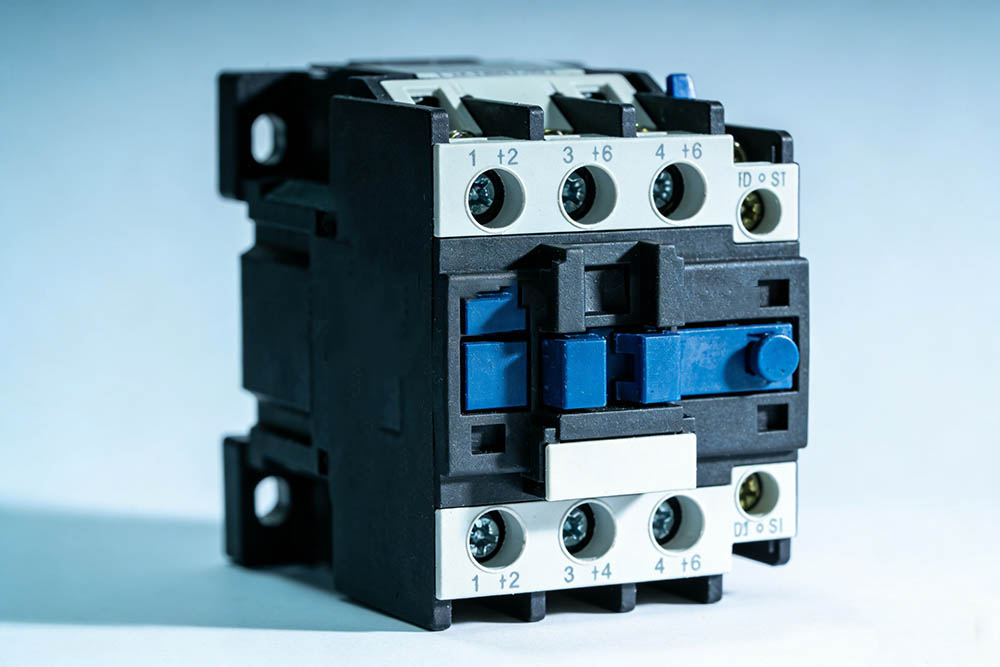
When selecting a contactor, we often see markings such as AC-1, AC-3, and AC-4. Many people know that they are related to load types, but they do not fully understand what these classifications actually represent. In this article, we will systematically explain the differences between these contactor utilization categories and, by combining them with practical application scenarios, help you quickly determine which rating should be selected.
Key Takeaway
- AC-1, AC-3, and AC-4 are contactor utilization categories defined by IEC standards, which are used to describe a contactor’s capability under different load conditions.
- AC-1 is suitable for resistive or slightly inductive loads such as heaters, where the making and breaking currents are approximately equal to the operating current.
- AC-3 is mainly used for the normal starting and stopping of squirrel cage motors, where the contactor must withstand high inrush current during startup.
- AC-4 is intended for motor applications that involve frequent starting, reversing, or inching control, where the electrical stress on the contacts is the highest and the operating conditions are the most demanding.
What Is a Contactor Utilization Category?
A contactor utilization category is a classification defined by IEC standards, which describes the operating characteristics of a contactor under specific load conditions. Rather than being a simple model distinction, it explains the current stress, power factor, and switching frequency that the contactor experiences during making and breaking operations.
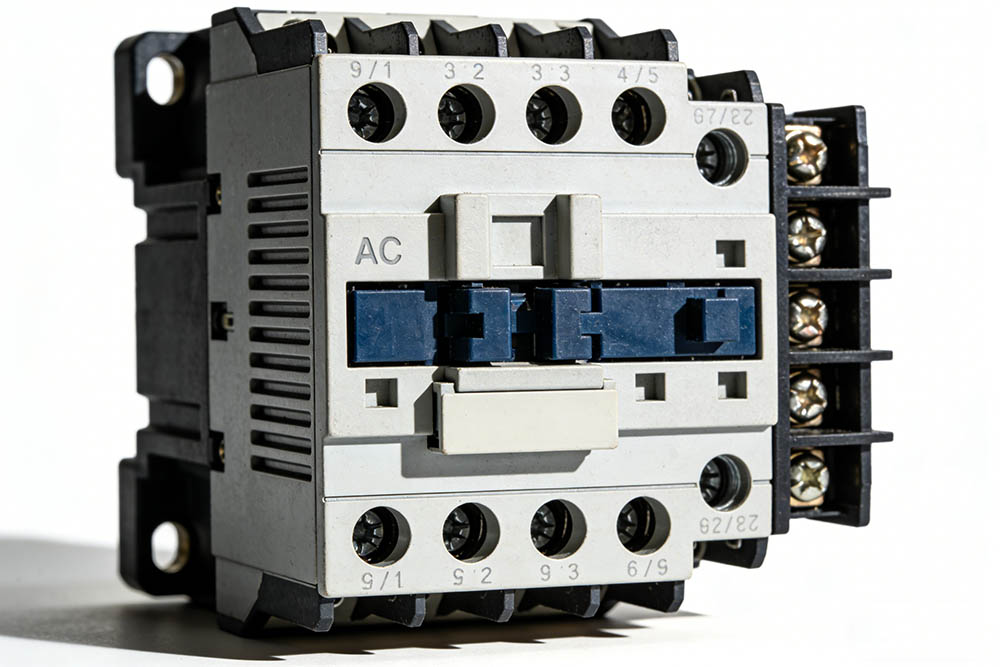
Different types of loads affect the contactor contacts differently at the moment of energizing and de energizing. While resistive loads have relatively stable current variation, motors generate an inrush current that can be several times higher than the rated current at startup. If a contactor is not selected according to the correct utilization category, contact welding, excessive wear, or a significant reduction in service life may occur.
Why Are Electrical Standards So Significant?
Electrical standards provide unified technical guidelines for equipment design, manufacturing, and application. Since electrical systems involve high voltage and high current, improper design or selection may result in equipment damage, system downtime, fire hazards, or personal injury. By complying with international or national standards, engineers can ensure that products meet recognized requirements in terms of safety, reliability, and performance.
Electrical standards also improve compatibility and global interchangeability. When equipment is designed according to unified standards, products from different countries or brands can be more easily integrated and replaced, which benefits export projects, bidding processes, and international engineering applications. For manufacturers, engineers, and end users alike, understanding and following relevant electrical standards supports successful project execution.
AC-1
The AC-1 utilization category applies to resistive or slightly inductive loads with a high power factor, such as electric heaters and resistance furnaces. Under these conditions, the current remains relatively stable during making and breaking operations, and the starting current is approximately equal to the rated operating current. Because the electrical stress on the contacts is relatively low, AC-1 represents a mild operating condition, and contactors used in this category typically achieve a longer electrical life.
AC-3
AC-3 is mainly used for controlling the normal starting and stopping of squirrel cage induction motors. At the moment of making, the contactor must withstand a starting current that is approximately five to seven times the motor rated current, which occurs because the motor is stationary. When breaking, however, the motor has usually reached normal operating speed, so the contactor interrupts the rated running current rather than the starting current. As a result, AC-3 is characterized by high current during making and normal current during breaking. In industrial applications, fans, pumps, compressors, and conveyors typically fall into the AC-3 category.
AC-4
AC-4 also applies to squirrel cage induction motors, although the operating conditions are more demanding than those of AC-3. Under AC-4 conditions, the contactor must withstand high inrush current during motor startup, and it may interrupt the circuit before the motor reaches full speed, which means that the breaking current can be close to the starting or locked rotor current. In addition, AC-4 commonly involves frequent starting, inching, or reversing operations, such as in cranes or presses. Since this operating condition causes severe electrical wear on the contacts, the rated current of a contactor under AC-4 is usually lower than under AC-3, and the electrical life is shorter.
What Are the Differences Between Utilization Categories?
Load Types
The fundamental difference lies in the nature of the load. AC-1 is intended for resistive or slightly inductive loads such as heating equipment, where the current variation is stable, while AC-3 and AC-4 are designed for motor control. Since motors generate high inrush current during startup, the contact requirements are more demanding.
Making and Breaking Currents
Under AC-1 conditions, the making and breaking currents are approximately equal to the rated operating current, so the electrical stress is low. Under AC-3 conditions, the contactor must withstand high starting current during making, while it interrupts normal running current during breaking. Under AC-4 conditions, the contactor not only withstands high starting current during making, but it may also interrupt the circuit before the motor reaches full speed, which results in breaking current close to locked rotor current and maximum stress on the contacts.
Electrical Life
Because the severity of operating conditions varies, the electrical life also differs significantly. AC-1 represents mild conditions with limited contact wear, AC-3 involves higher stress due to starting current, and AC-4 causes the fastest contact wear because switching frequently occurs under high current.
Rated Current Markings
The same contactor model may have completely different rated operational currents depending on the utilization category. For example, a contactor may be rated at 32 A under AC-1 conditions, while it may only be rated at 18 A under AC-3 conditions. This explains why selection should not rely solely on the current value without confirming the applicable utilization category.
How to Select the Right Contactor Based on Utilization Category?
Determine the Load Type and Control Method
When selecting a contactor based on utilization category, the first step is to determine the type of load and the control method rather than focusing only on the current value. If the load is primarily resistive heating equipment, it typically falls under AC-1. If the application involves normal starting and stopping of a squirrel cage induction motor, it generally belongs to AC-3. If the motor requires frequent inching, repeated starting, reversing, or interruption before reaching full speed, it is closer to AC-4. The more intensive the control method is, the higher the utilization category becomes, and the greater the electrical stress on the contacts.
Compare Ratings Under the Corresponding Utilization Category
Since the rated operational current of the same contactor varies under different utilization categories, the selection must be based on the data corresponding to the intended category. If the application involves motor starting and stopping, the AC-3 rated current or motor power should be referenced. If the application involves inching or reversing, the AC-4 rating should be used instead of applying the AC-1 current value. Many selection errors occur because only the maximum current marked on the device is considered without checking the associated utilization category.
Use Motor Power and Voltage for AC-3 and AC-4 Applications
In motor applications, selecting a contactor according to the rated motor power and voltage is often the most practical method, since manufacturers usually provide power ratings that reflect typical motor characteristics. For standard fan or pump applications under AC-3 conditions, this approach is efficient. When the operating condition shifts to AC-4, even if the motor power remains the same, a larger contactor or a solution better suited for frequent switching, such as a soft starter or variable frequency drive, may be required to reduce contact stress.
Consider Operating Frequency and Life Requirements
Utilization category is related not only to load type but also to switching frequency. Even if a load falls under AC-3, a high number of daily operations, elevated ambient temperature, or poor cabinet ventilation may reduce electrical life. In such cases, selecting a higher capacity model or a product with enhanced endurance, while reviewing electrical life data and coil voltage specifications, can help prevent premature contact wear or welding under frequent operation.
Conclusion
AC-1, AC-3, and AC-4 are not simple labels, since they define specific load conditions and switching stress levels. They determine the current stress that a contactor experiences during making and breaking operations, which directly affects safety and electrical life.
When utilization categories are properly understood and applied, stable and reliable system operation can be achieved. KRIPAL offers a wide range of AC contactors that provide effective solutions for various application requirements. Please visit our product page to find the solution that matches your needs.
FAQs
Q: Can AC-1, AC-3, and AC-4 replace each other?
No. AC‑4 devices can replace AC‑3/AC‑1, but not vice versa. Using AC‑3 for AC‑4 causes fast contact wear and shorter life.
Q: Why does the same contactor model have different current ratings under different utilization categories?
Because switching conditions vary. Tougher loads mean lower allowed current.
Q: Which utilization category is typical for motor control?
Normal motor start/stop: AC‑3. Frequent jogging/reversing: AC‑4.
Q: Should selection be based on current or power?
Use both rated power and current matching the correct utilization category.
Q: What happens if the selected contactor is undersized?
Contact burning, welding, reduced life, equipment failure, and safety risks.
Related Resources
Explore Knowledge Center >

Need a matching KRIPAL product?
Share voltage, quantity and destination. An engineer will reply with options and lead time.