Search
Knowledge Center
What Is the Difference Between an Isolator and a Circuit Breaker?
Discover the key differences in functions and safety roles between an isolator vs circuit breaker in electrical systems.
 December 27, 2025
Isolators and circuit breakers are common devices used in power systems, and they help maintain safe electricity distribution and usage. They have clear differences in function, structure, and application scenarios. Understanding the differences between isolators and circuit breakers can help people choose the right equipment and improve the safety and reliability of electrical systems. This article briefly explains the differences between isolators and circuit breakers by discussing their working principles, main functions, and typical applications.
 Key Takeaways
- Different functions: An isolator is mainly used to isolate the power supply and ensure safety during maintenance, while a circuit breaker is used to connect or disconnect circuits and provide protection.
- Arc extinguishing capability: A circuit breaker has an arc extinguishing device, which allows it to interrupt load current or fault current, while an isolator generally does not have this capability.
- Different usage scenarios: An isolator is mostly used for electrical isolation when equipment is under maintenance, while a circuit breaker is mainly used for circuit protection and control.
- Different safety purposes: A circuit breaker provides fault protection, while an isolator provides a visible disconnection point so that maintenance safety can be improved.
What Is an Isolator?
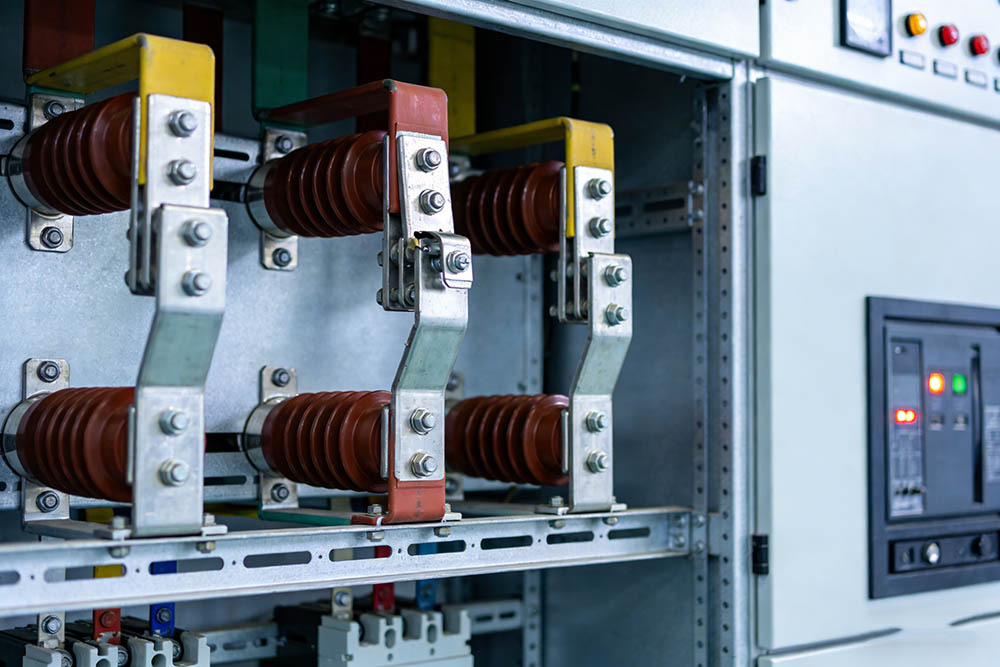
An isolator is an electrical device that is used in power systems to isolate the power supply. Its main function is to separate the circuit from the power source during equipment inspection or maintenance so that workers can remain safe. It is usually not used to interrupt load current, and it does not have arc extinguishing capability. Instead, it provides a clearly visible disconnection point so that people can confirm that the circuit has been isolated.
What Is a Circuit Breaker?
A circuit breaker is an electrical device that is used to connect, disconnect, and protect circuits. When overloads or short circuits occur in a circuit, the circuit breaker can automatically interrupt the current so that equipment damage or safety accidents can be prevented. Unlike an isolator, a circuit breaker has arc extinguishing capability, which allows it to safely interrupt circuits even when load current or fault current is present.
Differences Between an Isolator and a Circuit Breaker
Functions
An isolator is mainly used to isolate the power supply, which allows the circuit to be separated from the power source during equipment inspection or maintenance so that operators can remain safe. It mainly serves the purpose of electrical isolation. A circuit breaker, on the other hand, can connect or disconnect a circuit and can automatically interrupt the current when overloads or short circuits occur, which protects circuits and electrical equipment.
Arc Extinguishing Capability
An isolator usually does not include an arc extinguishing device, which means that it cannot be operated when load current or fault current is present, because an electric arc could occur and safety risks could increase. A circuit breaker contains an arc extinguishing system, which allows the arc to be quickly extinguished when current is interrupted, even when high current or fault conditions occur.
Operation Method
An isolator is typically operated when the circuit has already been disconnected or when there is no load current, which means it is often used together with a circuit breaker. A circuit breaker can be switched on or off while the circuit carries load current, and it can automatically trip when abnormal current is detected, so manual intervention is not required.
Structural Characteristics
An isolator has a relatively simple structure that includes contacts, insulators, and an operating mechanism, and its design focuses on providing a clear visible disconnection point. A circuit breaker has a more complex structure that includes arc extinguishing devices, protection mechanisms, and control systems so that it can operate safely and reliably under different electrical conditions.
Application Scenarios
An isolator is usually installed before or after a circuit breaker or on both sides of electrical equipment so that clear electrical isolation can be created during maintenance. A circuit breaker is widely used in distribution systems, where it controls circuit connection and disconnection and protects electrical equipment.
| Aspect | Isolator | Circuit Breaker |
| Functions | Used to isolate the power supply so that circuits can be separated during maintenance. | Connects or disconnects circuits and interrupts current when overload or short circuit occurs. |
| Arc Extinguishing Capability | Does not have an arc extinguishing device, so it cannot operate when load or fault current is present. | Includes an arc extinguishing system that allows current interruption under load or fault conditions. |
| Operation Method | Operated when the circuit is already disconnected or when no load current exists. | Can operate while the circuit carries load current and can trip automatically when abnormal current appears. |
| Structural Characteristics | Simple structure that includes contacts, insulators, and an operating mechanism that provides a visible disconnection point. | More complex structure that includes arc extinguishing devices, protection mechanisms, and control systems. |
| Application Scenarios | Installed near equipment or circuit breakers so that electrical isolation can be created during maintenance. | Used in distribution systems where circuit control and protection are required. |
Can They Replace Each Other?
Isolators and circuit breakers usually cannot replace each other directly. This situation occurs because their functions in a power system are different. An isolator is used to provide safe electrical isolation during equipment maintenance, which creates a clear visible disconnection point so that workers do not come into contact with live parts. A circuit breaker is mainly used to control the connection or disconnection of circuits and protect electrical equipment, and it can automatically interrupt current when overloads or short circuits occur.
There are also clear differences in safety capability. An isolator does not usually have arc extinguishing capability, which means that it cannot be operated when load current or fault current exists, because electric arcs may occur and safety risks may increase. A circuit breaker contains arc extinguishing devices and protection mechanisms, which allow it to safely interrupt circuits even when high current or short circuit conditions occur.
In actual power systems, isolators and circuit breakers are usually used together. A circuit breaker interrupts current and provides circuit protection, while an isolator forms a clear isolation point after the circuit breaker has opened so that equipment maintenance can be carried out more safely. Because each device performs a different function, they generally cannot replace each other.
Types of Isolators and Circuit Breakers
Isolators
Knife switch isolator is a common type with a blade-contact opening and closing structure. It features a simple design and low cost, widely used in substations and distribution systems to provide a visible disconnection point for maintenance.
Double column isolator comprises two insulating columns with contacts driven by a rotating mechanism. It is typically applied in high-voltage transmission systems requiring high mechanical stability and insulation performance.
Center break isolator has contacts that separate in the middle, creating a clear visible break when open. Its structure enhances electrical clearance, making it suitable for high and ultra-high voltage power systems.
Grounding isolator connects electrical equipment to the ground during maintenance to improve safety, and is usually used together with standard isolators.
Circuit Breakers
Air circuit breaker uses air as the arc extinguishing medium, mainly for low-voltage distribution systems. It has strong breaking capacity and is widely used in industrial power distribution and building electrical systems.
Vacuum circuit breaker extinguishes arcs in a vacuum chamber, enabling fast arc extinction and low maintenance. It is widely applied in medium-voltage distribution systems.
SF6 circuit breaker uses sulfur hexafluoride gas for arc extinction and insulation, offering excellent insulation and breaking performance. It is commonly used in high-voltage and ultra-high-voltage power systems.
Miniature circuit breaker provides overload and short-circuit protection for residential and small commercial distribution systems. It is compact in size and easy to install.
How to Choose Between an Isolator and a Circuit Breaker?
When people choose between an isolator and a circuit breaker, the decision should be based on circuit function, operating conditions, and safety requirements. Because the two devices serve different purposes, several factors should be considered.
It should be determined whether circuit protection is required. If a circuit needs to automatically interrupt current when overloads or short circuits occur, a circuit breaker should be selected because it provides protection and automatic tripping. An isolator does not provide protection, and it is only used to isolate a circuit.
It should be considered whether load switching is required. If equipment needs to be switched on or off while the circuit is operating, a circuit breaker should be used because it includes arc extinguishing capability that allows load current to be safely interrupted. An isolator is normally operated only when the circuit has already been disconnected or when no load current is present.

Another factor involves maintenance and safety isolation requirements. In substations or electrical maintenance environments, a visible disconnection point is often required so that workers can confirm that the circuit is isolated, which is why an isolator is used. In many power systems, both isolators and circuit breakers are installed so that protection and safe isolation can be achieved together.
Voltage level and application scenario should also be considered. Circuit breakers are widely used in distribution systems, industrial electrical equipment, and residential circuits where circuit control and protection are required. Isolators are more commonly found in substations, high voltage distribution systems, and maintenance scenarios.
Conclusion
Isolators and circuit breakers are both used in power systems, although their functions and purposes differ. A circuit breaker controls and protects circuits because it can automatically interrupt current when faults occur, while an isolator isolates the power supply and provides a reliable disconnection point for equipment maintenance. In many practical applications, the two devices are used together so that electrical systems can operate safely and reliably.
FAQs
Q: Can an isolator be operated under load
It generally cannot. An isolator usually does not have arc extinguishing capability, so it is operated when there is no load current or after the circuit has been disconnected by a circuit breaker.
Q: Can a circuit breaker replace an isolator
In some situations a circuit breaker can disconnect a circuit, although it cannot fully replace an isolator because an isolator provides a visible disconnection point that helps ensure safety during maintenance.
Q: Why are both circuit breakers and isolators often used in power systems
Their functions differ. A circuit breaker interrupts current and protects circuits, while an isolator provides safe electrical isolation. When both are used together, system safety can be improved.
Q: Which device is commonly used in residential electrical systems, an isolator or a circuit breaker
Residential distribution systems usually use a circuit breaker such as an MCB because it provides overload and short circuit protection, while isolators are more commonly used in industrial or power system environments.
Related Resources
Explore Knowledge Center >
Need a matching KRIPAL product?
Share voltage, quantity and destination. An engineer will reply with options and lead time.