Search
Knowledge Center
What Is the Difference Between an Isolator and a Circuit Breaker
Discover the key differences and functions of electrical protection devices in our guide: Isolator vs Circuit Breaker.
 December 20, 2025
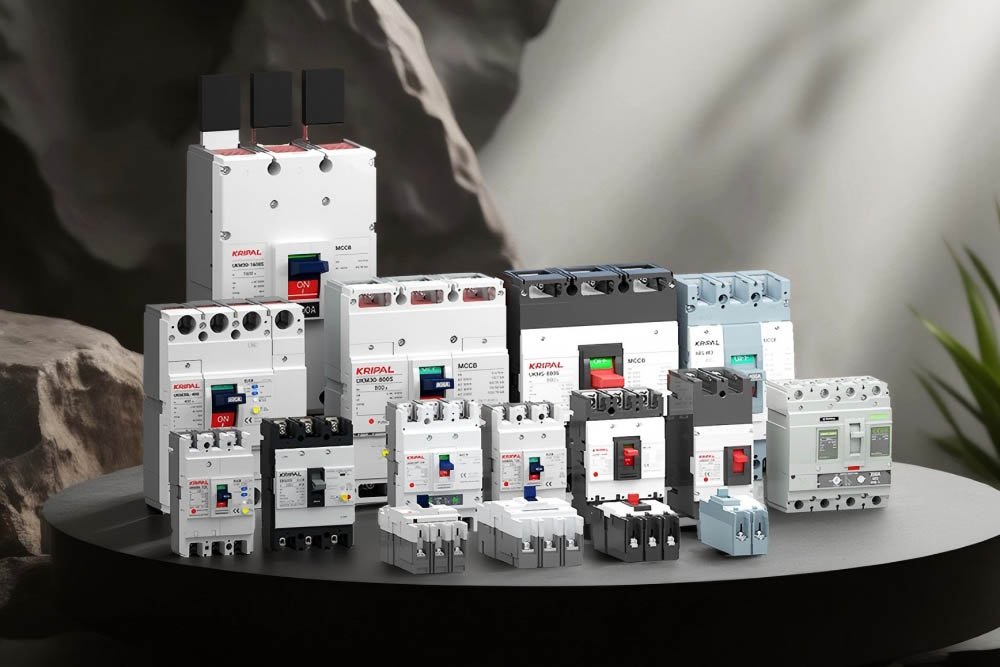
In power systems, isolators and circuit breakers are both widely used switching devices, yet many people confuse the two. In fact, they differ in structure, operating principles, functions, and application scenarios. Understanding their differences helps ensure proper selection and application while supporting the safe operation of electrical equipment. This article explains the distinctions between isolators and circuit breakers from the perspectives of function and application.
Key Takeaways
- Different functional positioning: An isolator is mainly used for circuit isolation and maintenance safety, while a circuit breaker is used for switching current and providing fault protection.
- Different arc extinguishing capability: An isolator does not have an arc extinguishing device and cannot be operated under load, whereas a circuit breaker includes arc extinguishing mechanisms and can interrupt load and short circuit currents.
- Different application scenarios: Isolators are mainly used for maintenance and safety isolation, while circuit breakers are widely used for circuit control and protection.
- Different safety focus: A circuit breaker provides protection functions, while an isolator emphasizes a visible disconnection point to ensure safety.
What Are an Isolator and a Circuit Breaker?
Isolator
An isolator is a switching device that separates electrical equipment from the power supply. Its primary purpose is to provide a clearly visible disconnection point so that maintenance and servicing can be carried out safely. It is generally not used to interrupt load current and focuses on isolation and safety.
Circuit Breaker
A circuit breaker is a protective switching device that can make, carry, and interrupt current. When overload or short circuit faults occur, it automatically disconnects the circuit to protect lines and equipment. It combines both control and protection functions.
What Are Their Working Principles?
Working Principle of an Isolator
An isolator operates through a mechanical mechanism that connects or disconnects contacts. When operated, the moving contact separates from the fixed contact and creates a visible air gap, which achieves electrical isolation. Since it does not include an arc extinguishing device, it is usually operated only when there is no load or when the current is very small, and it mainly provides safe isolation conditions.
Working Principle of a Circuit Breaker
A circuit breaker operates through an internal contact system and an arc extinguishing device. When overload or short circuit conditions occur, thermal, magnetic, or electronic protection mechanisms are activated, which cause the contacts to separate rapidly. At the same time, the arc extinguishing device suppresses and extinguishes the arc generated during interruption so that current can be safely cut off.
What Are Their Applications?
Applications of an Isolator
- An isolator is mainly used in power systems for safety isolation and configuration switching.
- During inspection, maintenance, or shutdown, it disconnects equipment from the power source and provides a visible break to ensure personnel safety.
- In practical systems, it operates together with a circuit breaker. The circuit breaker interrupts the load current first, and then the isolator opens to provide physical separation.
- It can also be used for busbar switching or line sectionalizing to adjust system configuration.
- Because it has no arc extinguishing capability, it cannot interrupt load or fault current.
Applications of a Circuit Breaker
- A circuit breaker is used for circuit control and protection in power systems.
- It can connect and disconnect normal operating current during routine operation.
- When overload or short circuit faults occur, it quickly interrupts the circuit to prevent equipment damage and fault escalation.
- During normal conditions, it performs switching tasks when circuits are energized or de energized.
What Are Their Functions?
Functions of an Isolator
- Electrical isolation function: It separates equipment from the power supply during maintenance or shutdown and provides a visible break to protect personnel.
- Configuration switching: It is used for busbar sectionalizing and circuit switching, which allows changes in system configuration.
- Auxiliary operation: It works with a circuit breaker so that after the breaker interrupts the current, the isolator provides secure isolation for maintenance.
Functions of a Circuit Breaker
- Making and breaking current: It can connect or disconnect load current under normal operating conditions.
- Fault protection: It automatically interrupts the circuit when overload or short circuit conditions occur, which protects lines and equipment.
- Arc extinguishing: It contains an arc extinguishing system that safely suppresses the arc generated during interruption.
- Control function: It performs routine switching operations in power systems.
What Problems May Occur If They Are Confused?
Load interruption using an isolator may cause equipment damage
If an isolator is used as if it were a circuit breaker and operated under load or fault conditions, strong arcing may occur. Since the isolator lacks an arc extinguishing device, the contacts may burn and equipment damage or accidents may result.
Lack of effective protection may expand faults
If an isolator is assumed to provide protection and no proper circuit breaker is installed, overload or short circuit faults cannot be cleared automatically, which may lead to severe equipment damage or fire hazards.
Maintenance safety risks
If a circuit breaker is treated as the only isolation measure and the visible disconnection provided by an isolator is ignored, there may be a risk of accidental reclosing or misjudgment of power status in certain high voltage systems, which can endanger maintenance personnel.
Violation of operating procedures
Power systems follow strict operating sequences, since the circuit breaker should be opened before the isolator, and the reverse order should be followed when restoring power. Confusing the two devices may lead to incorrect procedures and increase accident risks.
Comparison Between Isolators and Circuit Breakers
| Aspect | Isolator | Circuit Breaker |
| Basic Definition | A mechanical switching device used to isolate equipment from the power supply | A protective switching device used to make, carry, and interrupt current |
| Main Purpose | Provides visible isolation for maintenance safety | Controls circuits and protects against faults |
| Arc Extinguishing Capability | Does not include an arc extinguishing device | Includes an arc extinguishing system |
| Load Switching | Not designed to interrupt load current | Can interrupt load current |
| Fault Interruption | Cannot interrupt short circuit or overload current | Can interrupt overload and short circuit current |
| Protection Function | Does not provide protection | Provides overload and short circuit protection |
| Operating Condition | Operated only under no load or minimal current conditions | Can operate under normal load and fault conditions |
| Visible Disconnection | Provides a clearly visible air gap | Does not necessarily provide a visible break |
| Typical Installation Position | Installed after the circuit breaker in high voltage systems | Installed at the beginning of circuits or feeders |
| Operation Sequence | Opened after the circuit breaker and closed before it | Opened before the isolator and closed after it |
| Application Scenario | Used for maintenance isolation and system configuration switching | Used for routine switching and system protection |
| Automation Level | Usually manually operated | Can be manual or automatic |
Conclusion
Confusing isolators and circuit breakers may create gainful safety risks. If an isolator is operated under load, arcing and equipment damage may occur because it does not include arc extinguishing capability. If the protective function of a circuit breaker is ignored, faults such as overload or short circuit cannot be cleared in time, which may lead to wider system damage. Incorrect operating sequences may also affect maintenance safety.
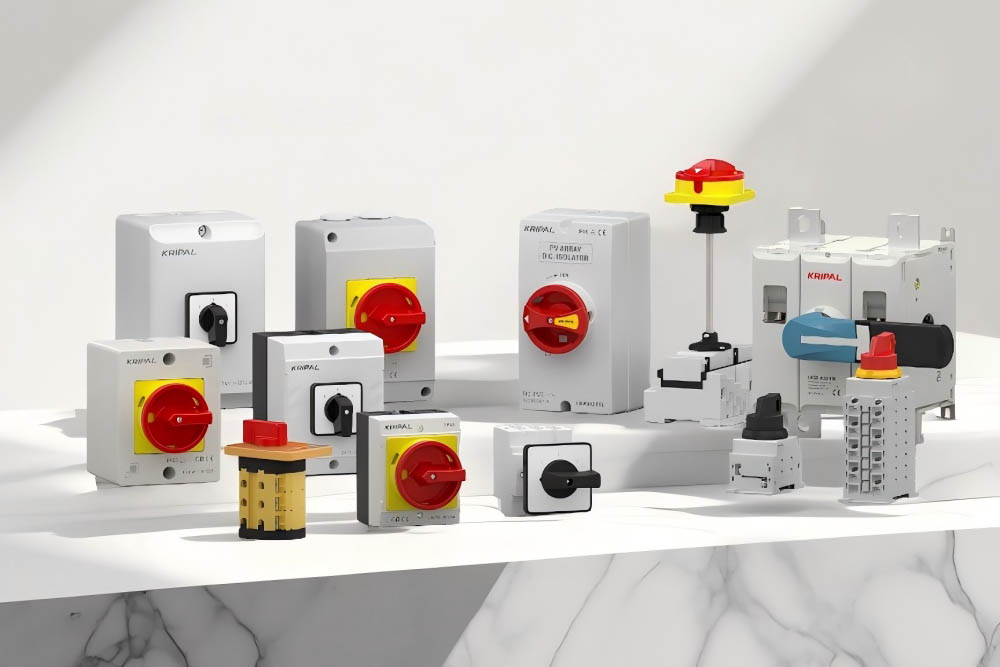
KRIPAL provides a comprehensive portfolio of isolators and circuit breakers engineered to support a wide range of applications. Explore our product offerings or contact our team to identify the solution best suited to your requirements.
FAQs
Q: Can an isolator be operated under load?
It generally cannot be operated under load because it does not include an arc extinguishing device and is intended for no load or minimal current conditions.
Q: Can a circuit breaker replace an isolator?
In some low voltage systems it can perform both control and protection functions, but in high voltage systems an isolator is still required to provide a visible disconnection point for safe maintenance.
Q: Why should the circuit breaker be opened before the isolator?
Because the circuit breaker is designed to interrupt current and extinguish arcs, it should disconnect the load first, after which the isolator provides safe isolation to avoid arcing risks.
Q: Are both devices considered switching equipment?
Yes, both are switching devices, although their functions differ, since an isolator focuses on safety isolation while a circuit breaker focuses on control and fault protection.
Related Resources
Explore Knowledge Center >

Need a matching KRIPAL product?
Share voltage, quantity and destination. An engineer will reply with options and lead time.