Search
Knowledge Center
What Is the Difference Between AC MCB and DC MCB
Learn the key differences between AC MCB and DC MCB, how they work, and when to use each type for safe and reliable electrical protection in AC or DC systems.
 November 20, 2025
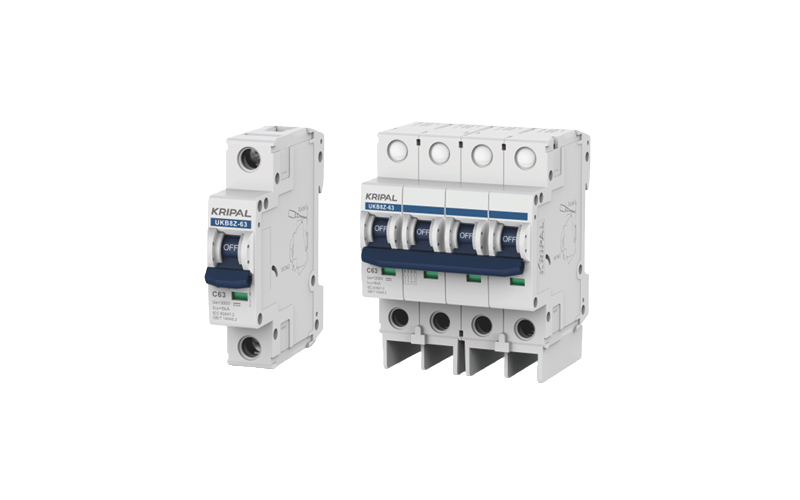
When protecting electrical circuits, selecting the correct type of miniature circuit breaker (MCB) depends on whether the system uses alternating current (AC) or direct current (DC). Although AC MCBs and DC MCBs may look similar, they differ in design, behavior, and suitable applications. This article explains those differences and shows current demand trends for both AC and DC breakers.
How AC MCB and DC MCB Work
What is AC MCB?
AC MCB is designed for alternating current systems. In AC systems the current changes direction many times per second. That alternating nature gives a natural zero‑crossing moment every cycle. During that brief moment the arc inside the breaker can extinguish more easily. Breakers use internal arc chutes and contact design optimized for this behavior, which makes AC fault interruption manageable.
What is DC MCB
DC MCB is made for direct current systems. In DC circuits current flows steadily in one direction and does not pass through zero. As a result, interrupting a DC fault requires more robust arc suppression mechanisms. DC MCBs use larger contact gaps, stronger insulating materials, and often specially designed arc‑quenching chambers or magnetic blow‑out systems to extinguish arcs reliably. Breaker polarity must also be observed during installation.
Because of these fundamental differences, using an AC‑rated MCB in a DC circuit, or vice versa, can lead to failed protection, sustained arcs, or other hazards. Proper matching between breaker type and circuit type is a must for safety and reliability.
Key Differences Between AC and DC MCBs
| Attribute | AC MCB | DC MCB |
| Current type | Alternating Current (AC) | Direct Current (DC) |
| Arc extinguishing method | Natural current zero crossing helps arc extinction and arc chutes | Specialized arc suppression: larger contact gap, arc chute or magnetic blow out |
| Polarity sensitivity | Typically polarity insensitive | Polarity sensitive — correct wiring required |
| Typical application | Residential wiring, lighting, sockets, general AC circuits | Solar PV systems, battery banks, DC powered equipment, renewable energy systems |
| Voltage & labeling | AC voltage rating (e.g. 230V, 400V) and “LINE/LOAD” marking | DC voltage rating (for example 12 V to 1500 V+) and polarity marking (+ / −) |
This comparison helps clearly see why a breaker designed for AC should not be used in DC circuits and vice versa.
Demand Trends and Industry Data
Recent market analyses show growing global demand for both AC and DC circuit protection devices. The overall circuit breaker market is expanding rapidly, driven by industrial growth, infrastructure expansion, and renewable energy deployment.
Notable data points include:
- The global circuit breaker market is expected to grow at a compound annual growth rate (CAGR) of around 8.4% between 2024 and 2032.
- The global DC circuit breaker market alone — including DC‑rated MCBs and other DC protection devices — was estimated at USD 4.13 billion in 2023, and is projected to grow with a CAGR of about 8.7% through 2030.
- Low‑voltage breakers will continue to lead segment demand. Nearly half of the revenue in 2025 is projected to come from low‑voltage devices used in residential, commercial and light industrial applications.
These trends reflect wider shifts in energy production and consumption: more solar PV installations, energy storage systems, electric vehicle charging infrastructure, and distributed energy resources. As DC systems expand in renewable energy and storage, demand for DC‑rated protection rises. At the same time, urbanization and infrastructure upgrades sustain demand for AC‑rated breakers in buildings and industrial plants.
When to Use Each Type of MCB
Use AC MCB when your system is built on conventional AC supply: such as home wiring, office electrical circuits, industrial AC circuits, lighting, sockets, HVAC and general AC loads.
Choose DC MCB for installations running direct current: such as solar photovoltaic systems, battery storage arrays, electric vehicle supply equipment, standalone DC systems, or renewable energy and storage infrastructure. DC MCBs provide safe arc interruption and tailored protection for DC electrical behavior.
Practical Considerations for Mixed Systems
For systems containing both AC and DC circuits, like hybrid solar plus grid installations, treat AC and DC circuits separately. Use AC MCBs on the AC side, and DC MCBs on the DC side. Maintain clear separation of AC and DC wiring, ensure proper grounding and insulation, and label circuits clearly. Never mix AC and DC loads on the same breaker.
When installing, follow all manufacturer instructions for polarity, wiring, derating (if bundling cables), and ensure correct voltage ratings. Periodic inspection and maintenance should include verification of contacts, insulation integrity, and correct marking for circuit type.
Conclusion
AC MCB and DC MCB differ at their core in how they deal with current, interrupt arcs, and protect a circuit. AC breakers rely on alternating current’s natural zero‑crossings to clear faults, while DC breakers use more robust arc suppression features to interrupt continuous current. Matching the breaker type to the circuit type ensures safety and proper protection.
If you need high-quality MCBs tailored to either AC or DC systems, whether for residential, commercial or renewable energy applications, contact Kripal to ask for a quote.
Related Resources
Explore Knowledge Center >

Need a matching KRIPAL product?
Share voltage, quantity and destination. An engineer will reply with options and lead time.